
Reviewing skills with brain dump and audit
REFINING 3 THEMES TO EXPLORE

ASSESSING strenghts and weakness
KAREN STRENGTHS:
- Assemblage
- research
- keen to experiment with ideas
- personal experiences
- installation
- photography
KAREN WEAKNESSES
- Lack of learned artistic skills: drawing, painting sculpting etc
- Very weak on anything digital
- Time management and direction
- over thinking/worrying
THREE THEMES
Firstly, Let it Burn, which is an expression I read in a book recently used as a way of saying to let go of old ideas absolutely. Ingrained, societal, generational, beliefs that no longer serve you well. Let them burn.
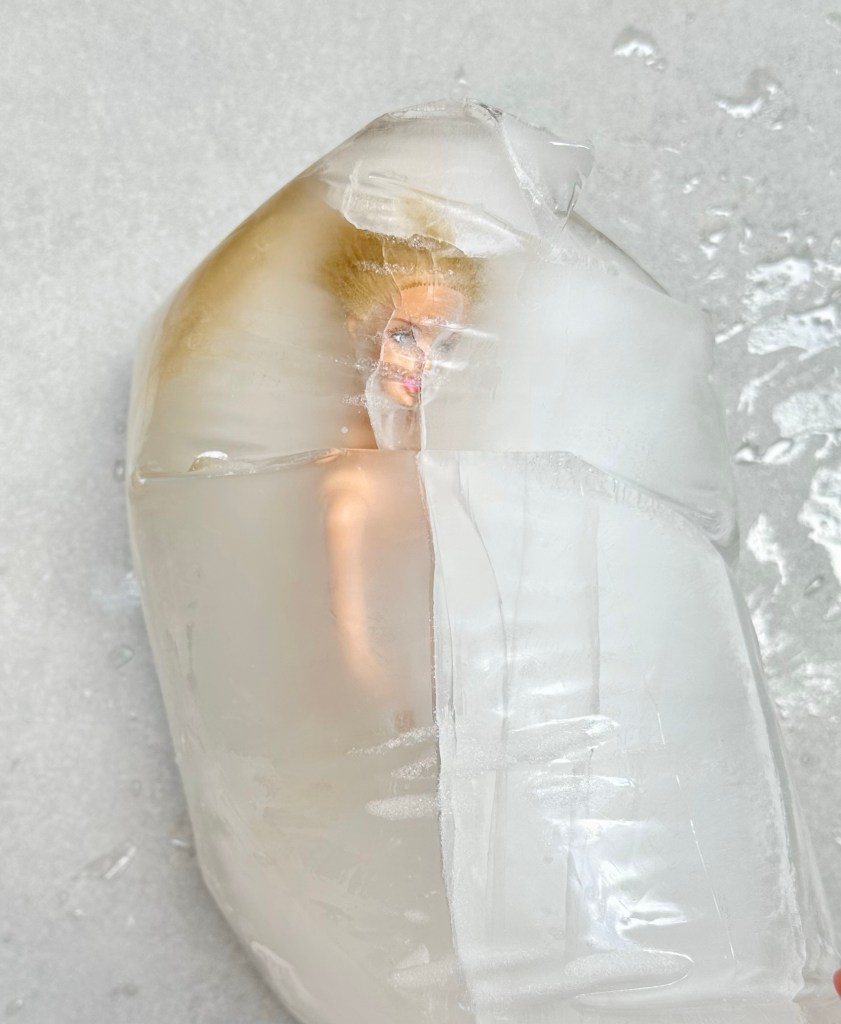
Secondly, encasing Barbie in epoxy resin. This will be to symbolise the stuckness that the Barbie model of women finds themselves in as in the real world, you do age, you do not stay dangerously thin, you are not always happy, smiling and with shiny lips.
Thirdly, I am investigating the idea of photographing the front door of every home I have ever lived in and creating a collage of all the images.
Barbie is an doll created in 1959 with the original intention to show post war girls that there are other possibilities than being a housewife. Although well intentioned, the idea that a girl could be an astronaut, a model, POTUS, a racing driver all at the same time had the effect of leaving the vast majority of girls feeling like they were doomed to fail – especially as this was a time (1950s) of rampant misogyny and sexism.

Barbie came to represent all that thought I should want to be: thin, pretty, fun, happy, always fully made up. Always looking good for a man – it may not have been the original intention of Ruth Handler the creator of Barbie but that is certainly how generations of women digested it. Obviously it wasn’t just this doll, it was the general messaging of the time that was directed at women but certainly Barbie’s unobtainable and distorted appearance of thinness with disproportionately long legs, huge pert boobs etc alongside her resolute whiteness has launched a generation of women who grew up with body dysmorphia and from an early age believing that all that mattered was how you looked.
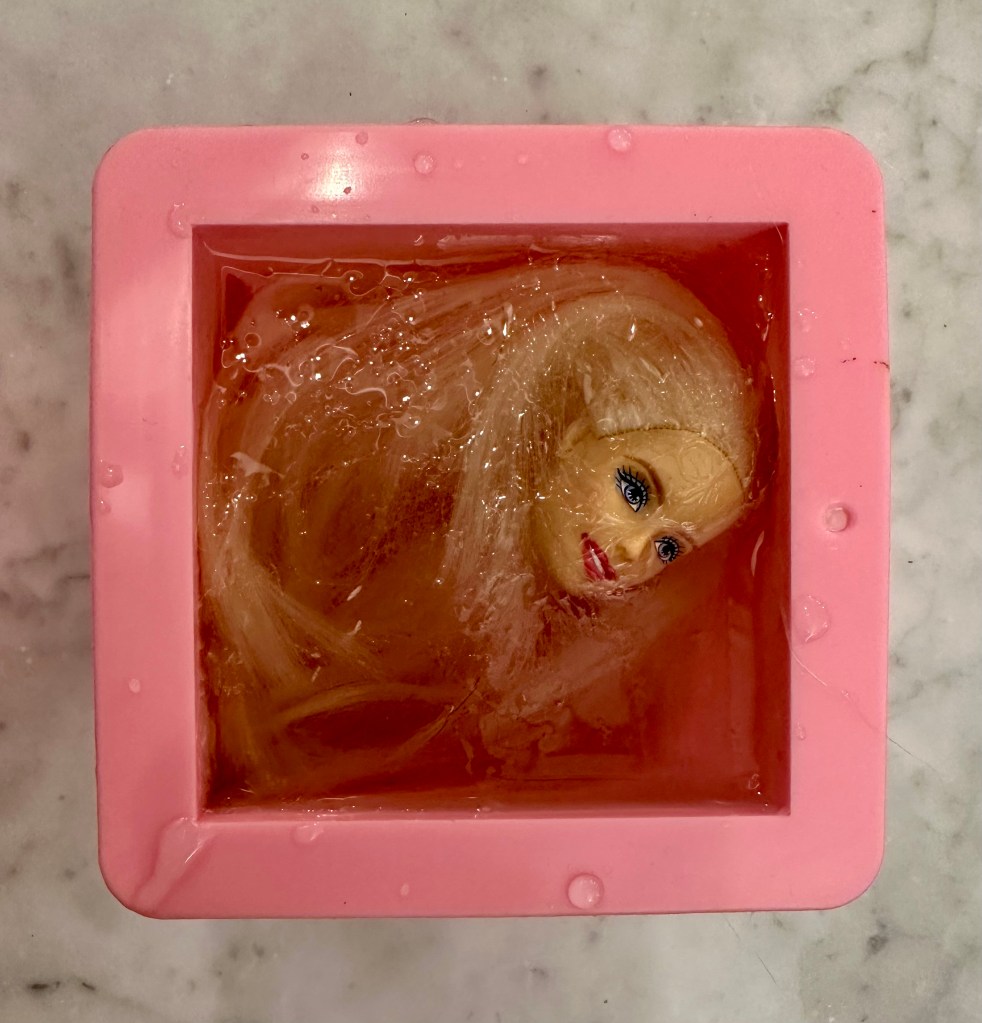
I have been looking at the restriction that being brought up in a world where women existed only in their relation to men and where everything was from the male gaze. I am exploring how I can visually create that feeling of stuckness and being trapped. I’m experimenting with freezing Barbie in silicone cake tins as a way to explore the idea of ultimately encasing her in clear silicone – stuck forever – thin, smiling, broken. This also leads on to looking at the ‘glass ceiling’ that generations of women have experienced and still do.
As one of these girls myself, now, as a woman I a relieved that that stereotype has been renounced. And I want to Let it Burn!
ARTISTS I HAVE LOOKED AT IN MY RESEARCH
JENNY SAVILLE
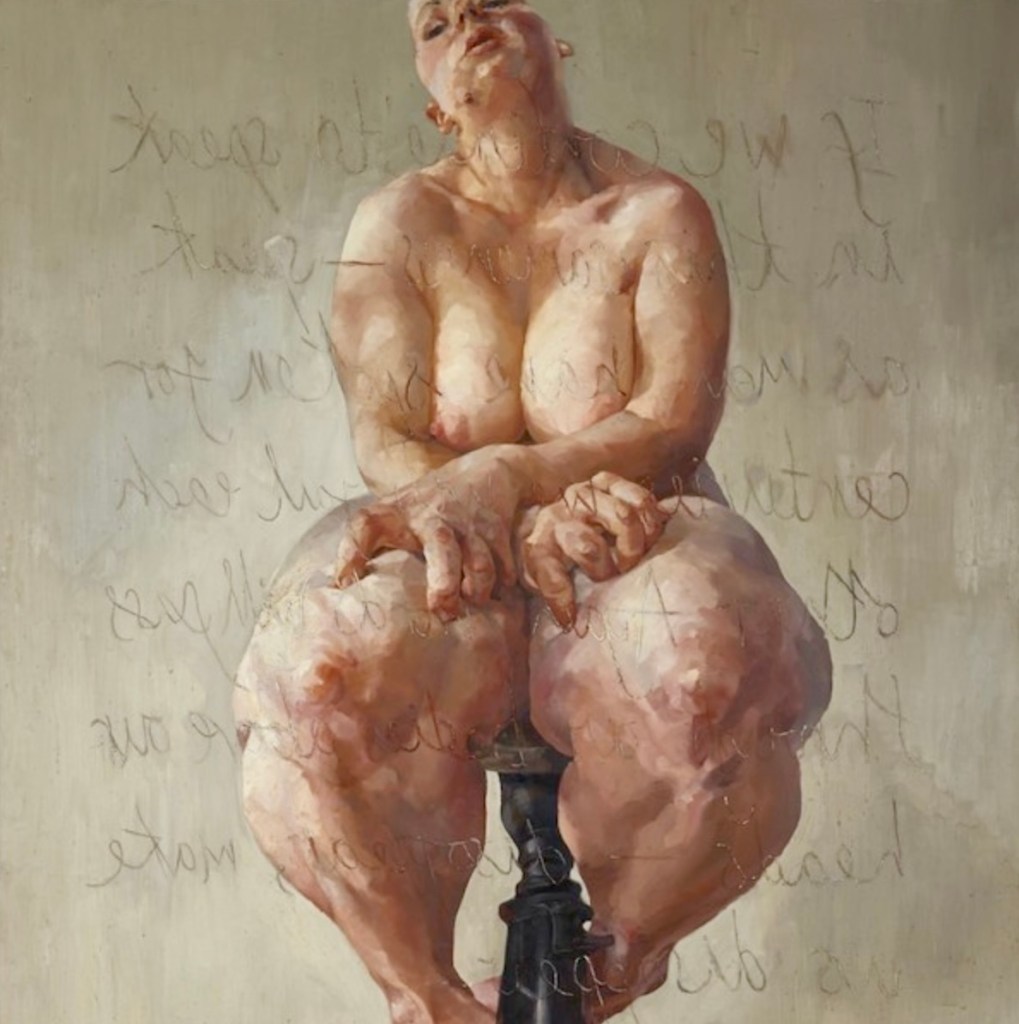
While I’ve been thinking about this Barbie woman construct and how it created an feeling of never being enough, I remembered Jenny Saville’s huge paintings of naked women – usually herself. Saville said they were “women who were made to think they are big and disgusting” but they are quite the opposite. Proud and beautiful, themselves and unique. Saville painted these using tiny brushes which in itself feels tender, gentle, respectful. I imagined the hours and hours it would take Saville to slowly and carefully layer on the paint to create the extraordinarily candid flesh.
JOSEPHINE MECKSEPER
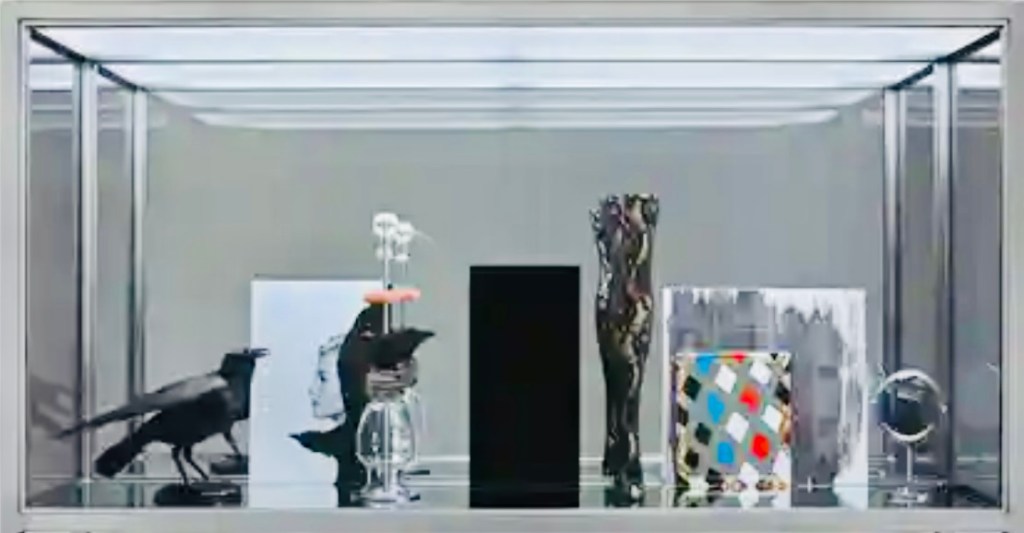
I looked at the work of Josephine Meckseper’s collages and installations and her comment within them on consumerism, advertising and the political implications of this iconography. I love how each object appears to be placed randomly and seems to have no individual meaning. I see this as a very creative way to show the obscenity of consumerism and possesion of objects. I related to her work as I explore the Barbie theme and her work made me look more deeply at the symbology of Barbie – not just as the ‘perfect woman’ through the male gaze, but also as a fully paid up member of the consumerist society. I started to connect how Barbie’s looks helped make a generation of women feel not good enough, and the obsession with the idea that the acquisition or ownership of goods is a reflection of status and self-identity and how shopping has become a religion for some people.
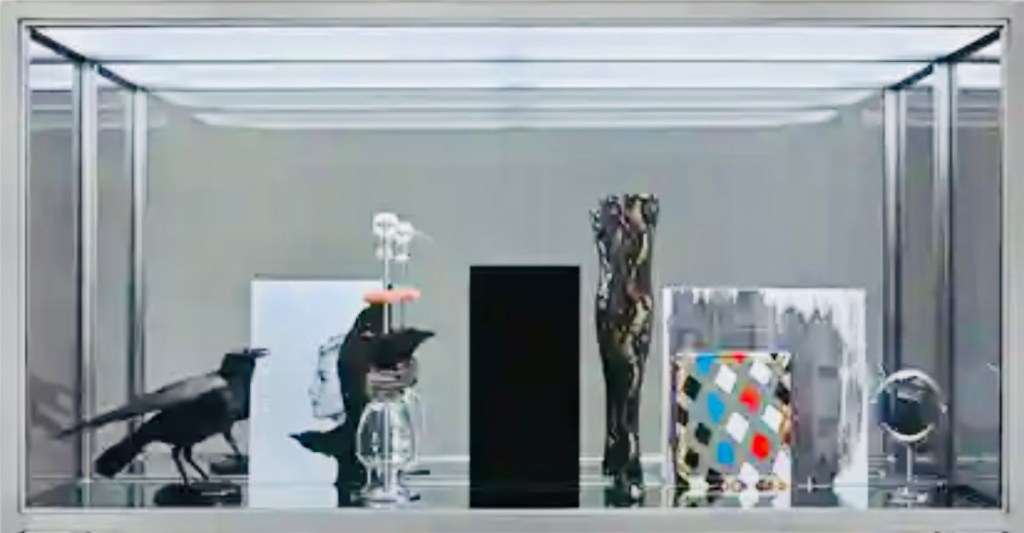

The Complete History of Postcontemporary Art (2005)
MAARTIN BAAS
I am exploring the work of Martin Baas, a Dutch artist who created a series of pieces of furniture called “Smoke.” He took wooden furniture and burnt and charred them but they remain standing and take on a new kind of eerie beauty. A metamorphosis of sorts. This series really challenges conventional ideas of design, craftsmanship, and functionality – burning is usually used to destroy furniture but here he uses it in a controlled way and makes the pieces beautiful, unique and gives them a new life. I like how he uses classic design pieces, especially the decorative Baroque pieces that, as they stand, are a little ‘fancy and frou-frou’. After he has charred them, they go from being pretty to beautiful. I like the darkness of them as well. For me, it’s as if he’s burned off the top fancy layer and exposed the majestic, solid inside. I think that what happens when they have been burnt, is that they have more of a sense of majesty about them than before which I like, as the baroque design period was lauded all over Europe by the Royal families and every palace is still stuffed full of this design.
Baas’s work questions the purpose and meaning behind objects of furniture and his processes turn everyday objects into Art. I also think his work is really fun and it looks like he has a lot of fun actually creating pieces. I think that comes across – there is a sense of humour in his work.
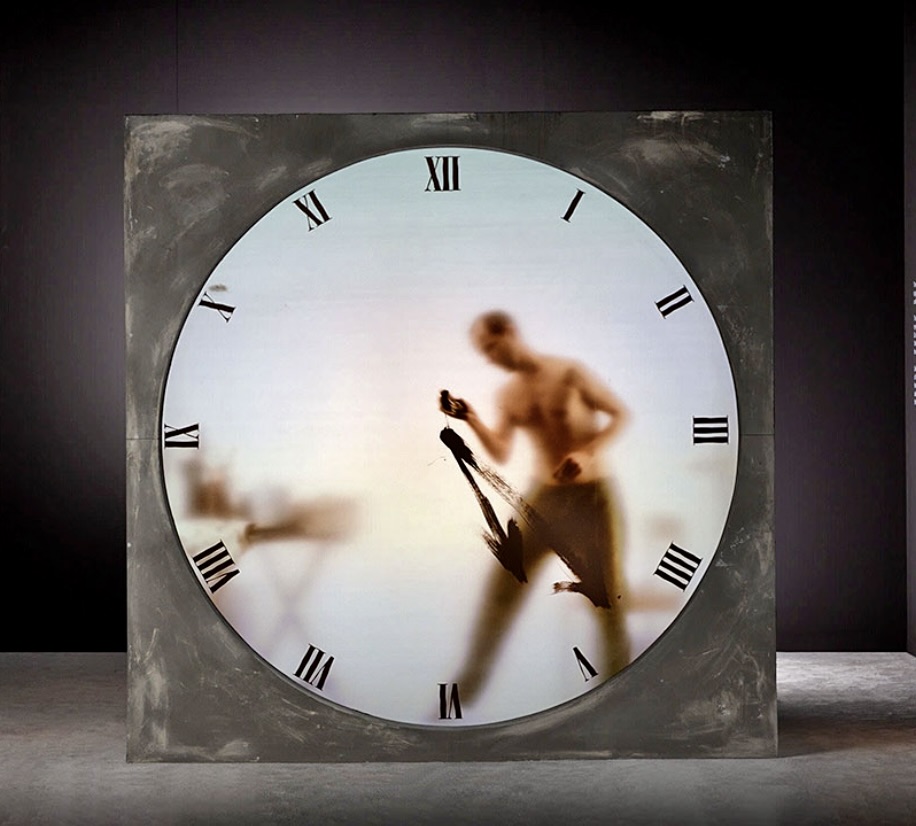
I am also drawn to the series of clocks that Baas has produced. They show a person trapped inside constantly drawing on the time then rubbing it off and starting again a minute later.
This series of clocks are beautiful clever, witty pieces but I also see them as a having a nightmarish quality. The nightmare of time just slipping by and as one minute ends it has gone forever and a new one starts then it ends and on and on and on. The blurry but clearly human figure just keeps going on and on with his task of drawing on and rubbing off. I wonder if Baas commenting on the seemingly modern trap of no time for anything.
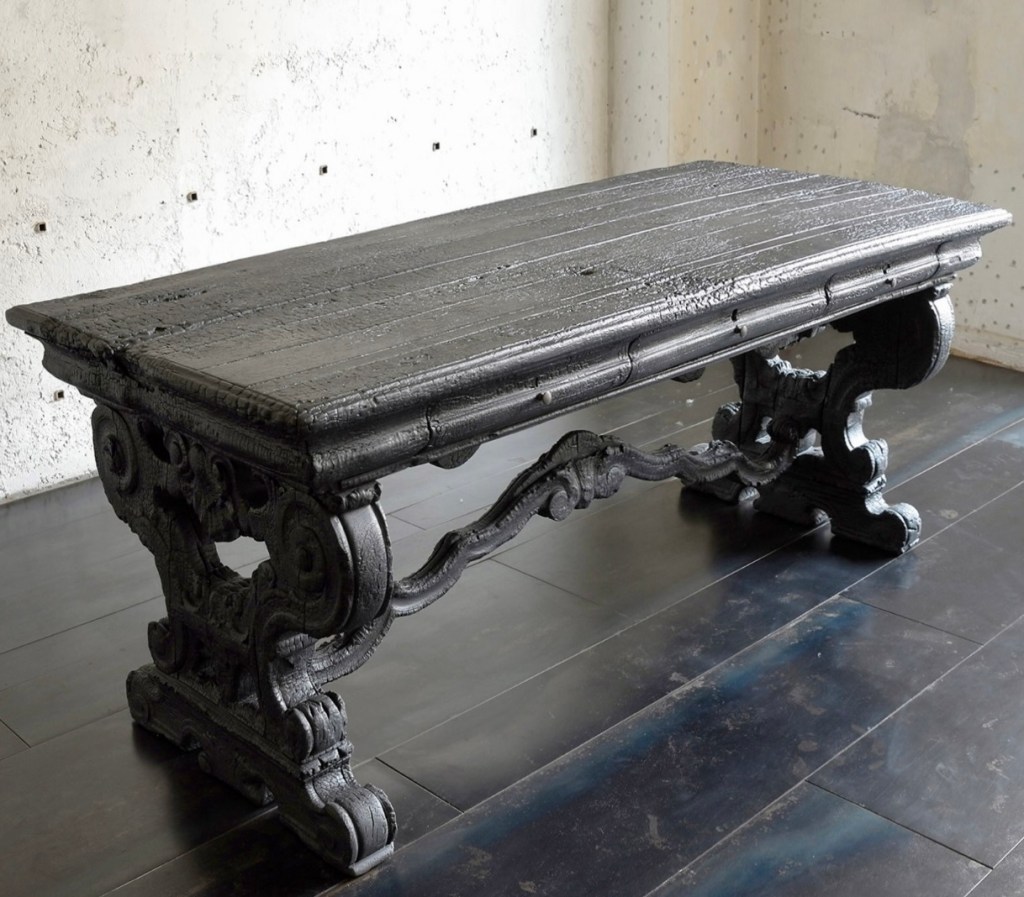

Seeing Baas’s work as inspired me to experiment with burning wood and I have researched the old Japanese tradition of Yakisugi, which is the traditional method of preserving wood through charring the surface to make it more durable. This creates a beautiful black uniquely patterned surface. Although I cannot find reference to this ancient method in reading about this Smoke series by Baas, I am sure that it must have provided some inspiration.
BRUCE CONNER
I have looked at a 1960 work by Bruce Conner called “The Box” described below upon winning a competition. I find this artwork claustrophobia – almost stifling. The idea that of trying to grow and thrive but you are stuck and trapped. I relate to this in a very personal way as I noticed how I construct my own box made out of all the messages and ‘memos’ I have ever recieved from the world around me.
“a powerfully dynamic and existential statement regarding human tragedy. His statement assumes all the proportions of the macabre when we recognize the decaying remains of a child cramped into the box, surrounded by all the inconsequential toys of his life, and trying to grow, but hitting his head and limbs on all sides of the box.”

ROBERT MAPPLETHORPE

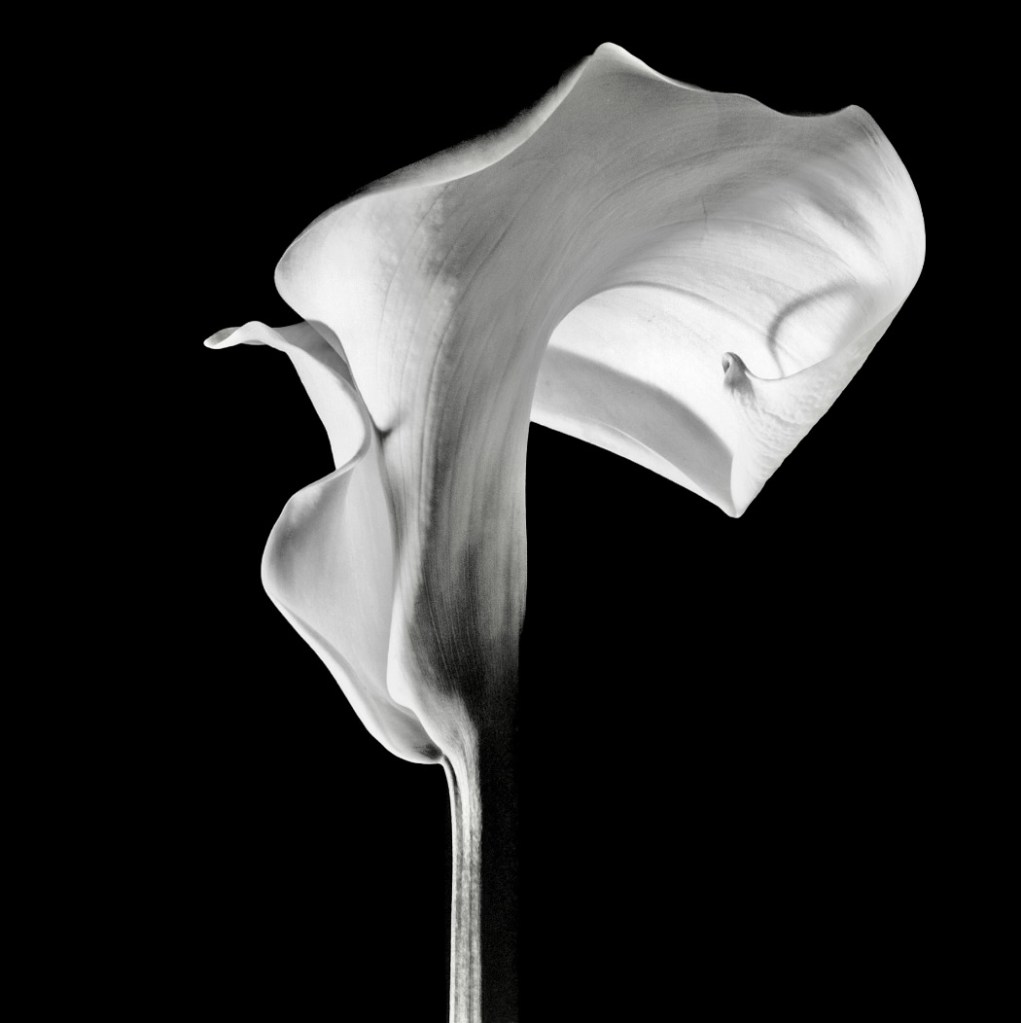
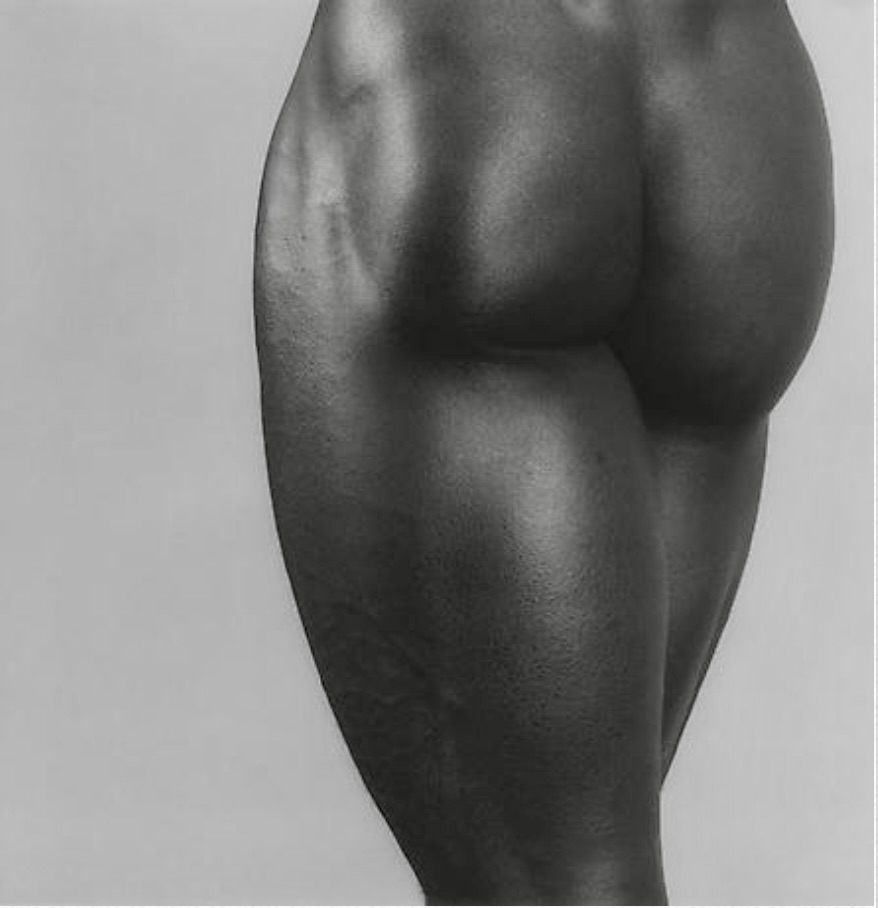
Mapplethorpe’s photographs of flowers and plants portray them symbolically. I find his photographs of flowers intimate, vulnerable and strangely indifferent. I thought it was very poignant that a few days before he dies, he send his close friends a black and white photograph of a bowl of tulips that are leaning over, presumabley somewhere on their way to dying. Tulips are almost more beautiful as they are dying than when they are freshly cut and standing erect and tight budded. There is something moving about a dying tulip stem that has opened itself fully and is now bowing down ready for the end.
I feel drawn to the duality of Maplethorpe’s work; how he photographed highly stylised and explicit S&M scenarios from the gritty underground, gay world of 1970/80s New York and at the same time he photographed flowers, capturing their exquisite beauty and delicacy. He brilliantly captured the transience of flowers and his images remind me how they both live and die in beauty.
Mapplethorpe loved flowers and photographed them exquisitely. I have read a lot of comparisons between his pictures of flowers and both his erotic pictures of the male body through the male gaze and his images of homoerotic bondage and fetishism. But I think that he might have just loved flowers and making images of them. He was savvy and I’m sure wouldn’t have done anything to discourage the media connecting his flowers with the erotic.
I love the nakedness of his images – he makes them the opposite of ‘flowery’ by stripping back everything and often he will just have one stem in the frame, isolating the flower as an object without context. He creates the same bareness and separation in his series of sculpture-like images of various parts the male torso.
For me that is the comparison; the bareness and the sculptural way both flowers and the bodies are framed against a plain background so that their beauty stands alone, unadorned and perfect. I feel that is a much stronger connection than the erotic comparisons often made in these two areas of Mapplethorpe’s work.
Cornelia parker


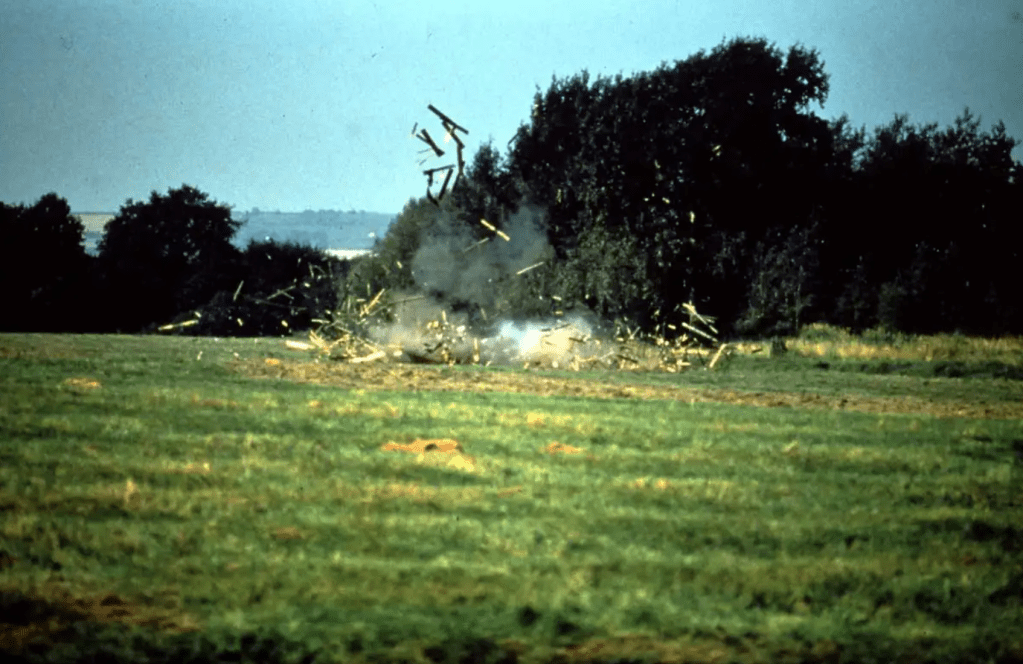
I love how Parker repurposes objects and presents them in new contexts. I first saw her work at her retrospective at the Tate Britain in 2022. I was struck by her curiousity and how Parker explores the transformative power of destruction and the potential for new beginnings. Her work excites me in how she kills things off and then resurrects them . Her suspended installations made me feel they could almost represent the world we live in today which is unstable, in flux; and although the original objects: silverware, brass instruments, a shed etc are still there, they hover over the ground which for me reflects the uncertainty of the world, and my place within it. I love how suspending the pieces makes them come alive – they gently move sometimes so each piece becomes an individual thing just hovering almost as if they are waiting, weightless, different and new . Perhaps that’s what I feel, about my own relationship to the world. It is a universal condition, that of vulnerability. We don’t have solid, fixed lives; we’re consistently dealing with what life throws at us.
“When I walked inside her “War Room” I felt stunned. It is a tent made from the sheets of which Remembrance Day poppies are cut from. Hundreds and hundreds of sheets. All the empty spaces where the poppies should have been reminded me of all the hundreds of thousands of young men and women who had lost their lives in war. I thought of my three great uncles who all died in World War 2. I never knew them and all three of them were younger than my sons are today. They were 18, 19 and 21. I felt overwhelmed with sadness looking at all the empty flowers that were like the young lives that should have bloomed but didn’t and all the empty places left behind in families, friendships, love affairs and communities. The red of the room felt intense but not bloody. For me it felt like being inside of a human heart and standing deep inside the inner chambers looking out and seeing all these holes that should not have been there. All these spaces that once were filled.
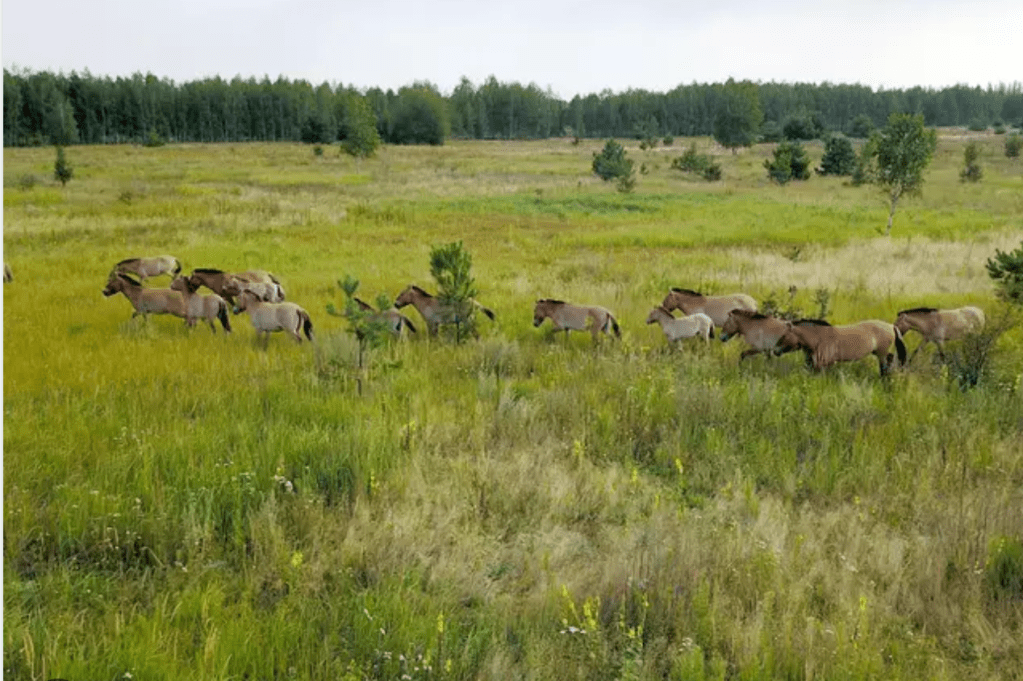
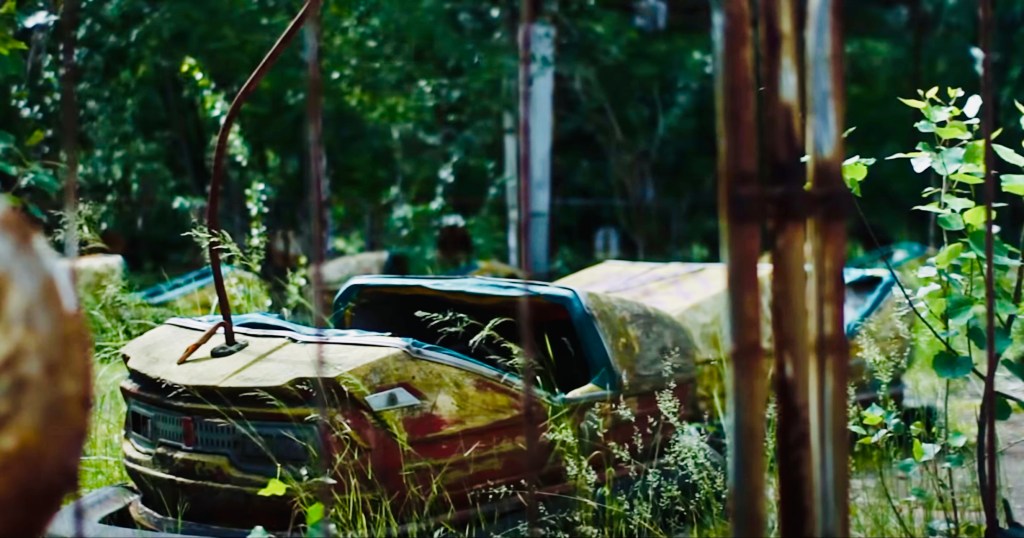
REGENERATED CHERNOBYL I am also looking at the theme of Hope and Renewal. That something new always grows out of even the most bleak and shattered things. I am looking at how new life springs forth from burnt out fields and how the devastated nuclear site of Chernobyl is now bursting with new wildlife, flowers and meadows.


DIary of project journey + EXperimenting
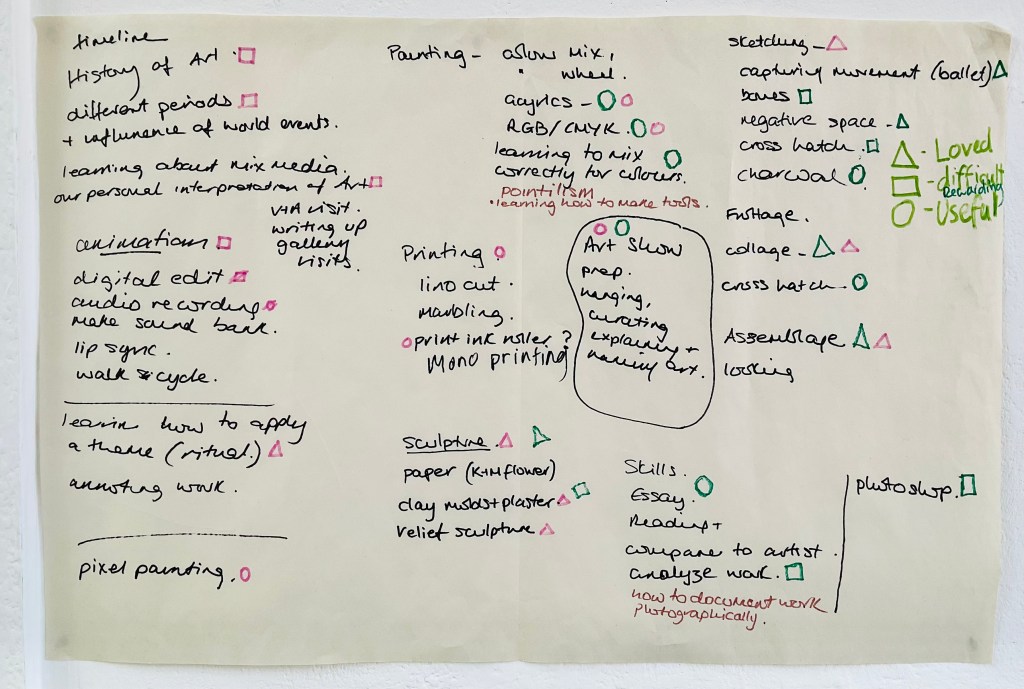
20.3.23 Kicking off first thoughts into the final project, in a class with Philip I teamed up with a classmate and we filled an A1 piece of paper with a brainstorm of all the things we have learned on the course and then graded them with “Loved,” “Difficult” and “Useful”. This was helpful to start seeing all the things we had learned and to remember what we liked and were drawn to. I followed this exercise with writing out three headings for vague ideas and then I tried to freely write what came to me about each idea.
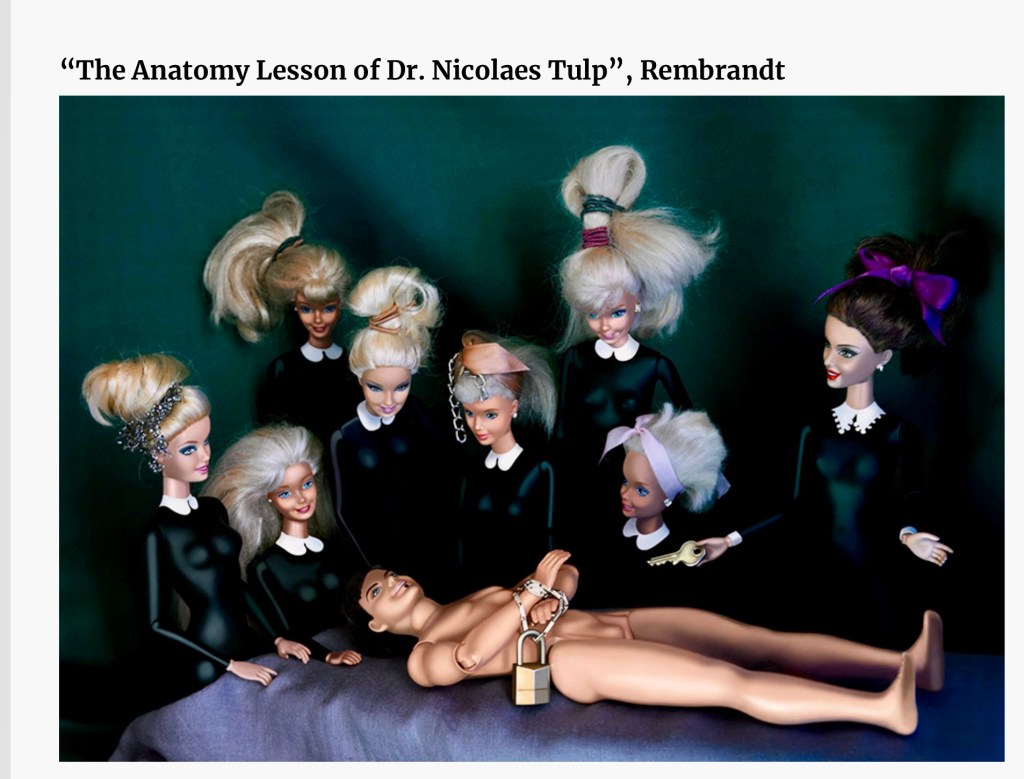
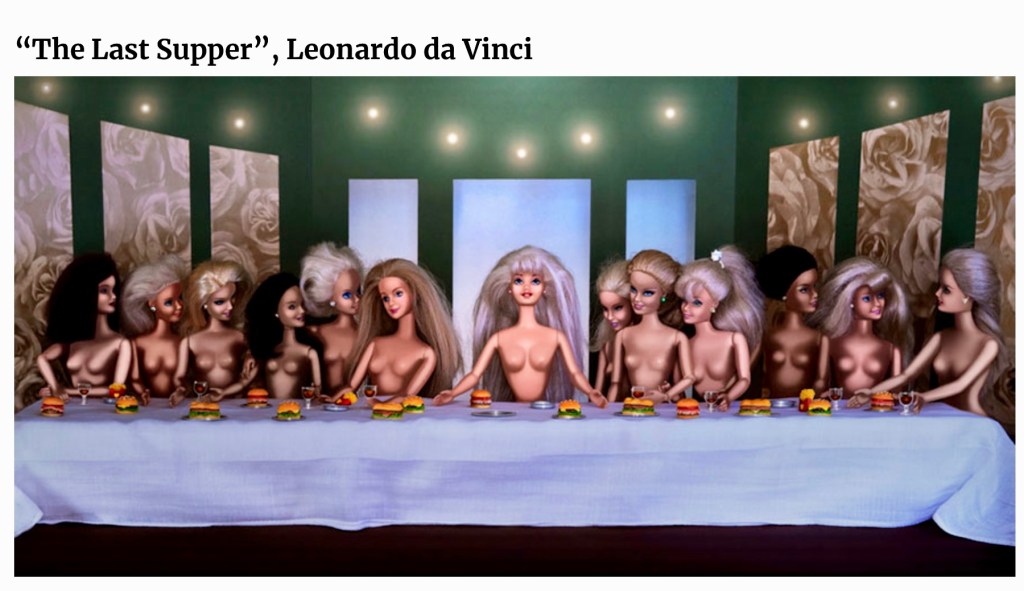
21.3.23 I started exploring the Barbie idea by looking through work by artists who have used Barbie as a symbol in their work: Catherine Thery recreates famous paintings swapping the men for Barbies. The powerful body of work is entitled ‘Not The Ones You Think’ and aims to raise questions about beauty, intelligence, and women’s place in society – both then and now.
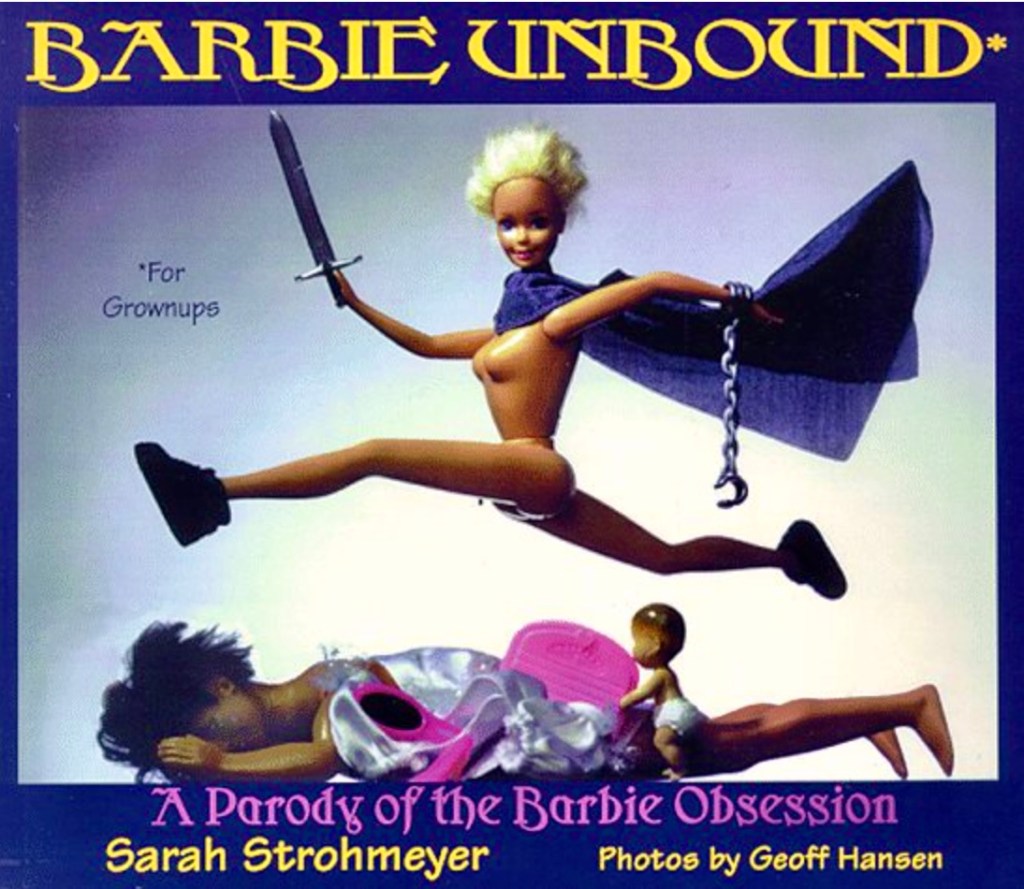
I bought copy of Sarah Strohmeyer’s book “Barbie Unbound: A Parody of the Barbie Obsession” where the doll is used as a medium to discuss sexual issues, with an unglossy Barbie facing real problems
30.3.23 I put some Barbie parts and a whole doll in water and froze the, It struck me that the body parts that I froze in a silcone cake mould in the freezer next to chips and peas gave a nod to the reality of life for women especially when Barbie was first created. Tied to kitchen, cooking for children and husband, being moulded into the gender role that was expected in 1950s America.
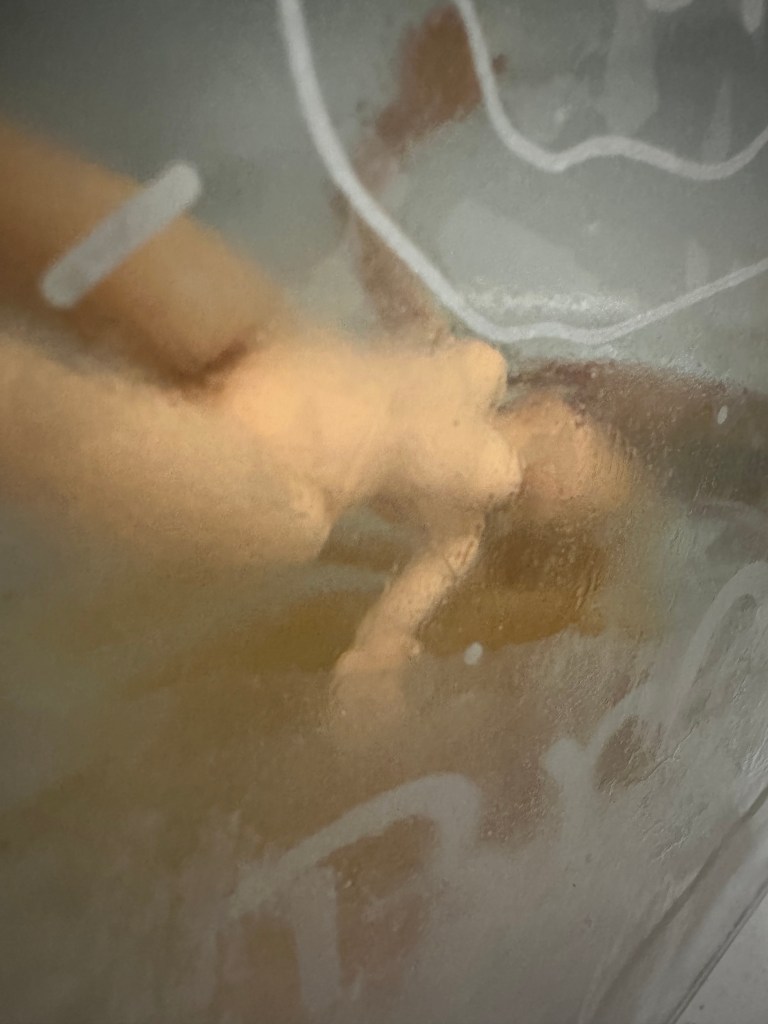
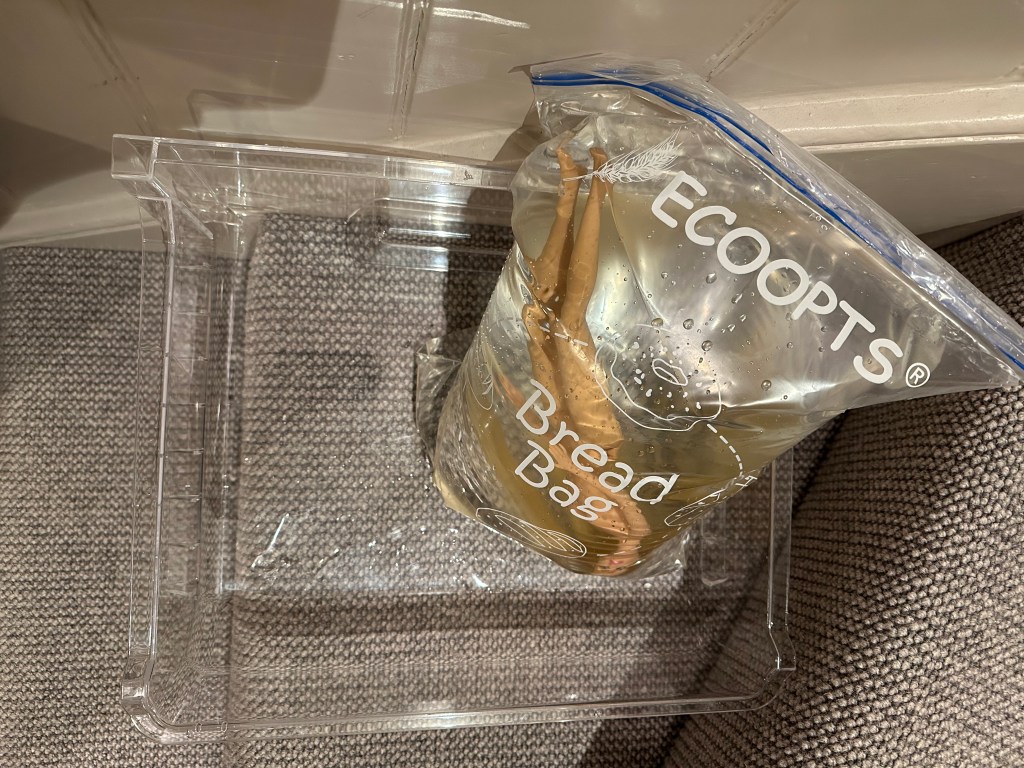
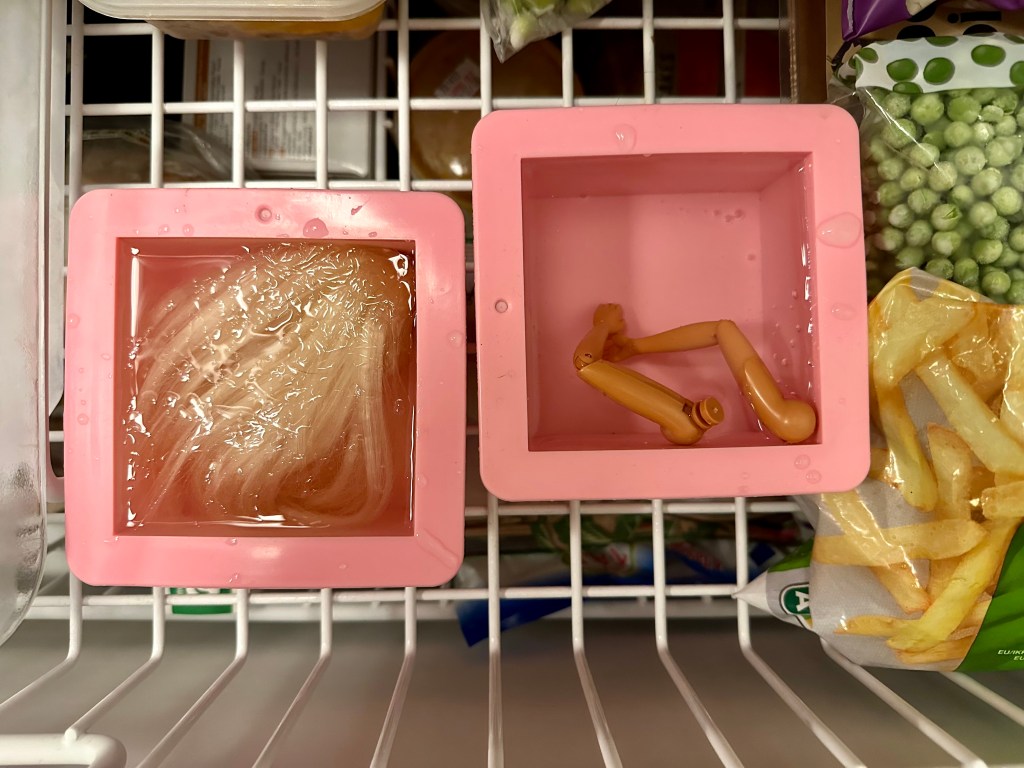

28.4.23 Attempting to char and burn wood for an experiment in printing I was taken with how beautiful it is. I photographed all the pieces I burned and the idea of ‘Burning’ speaks strongly to me. This is a theme I want to experiment more with. I started looking at artists like Maartin Baas who created a series of charred furniture – the collection was called ‘Smoke’

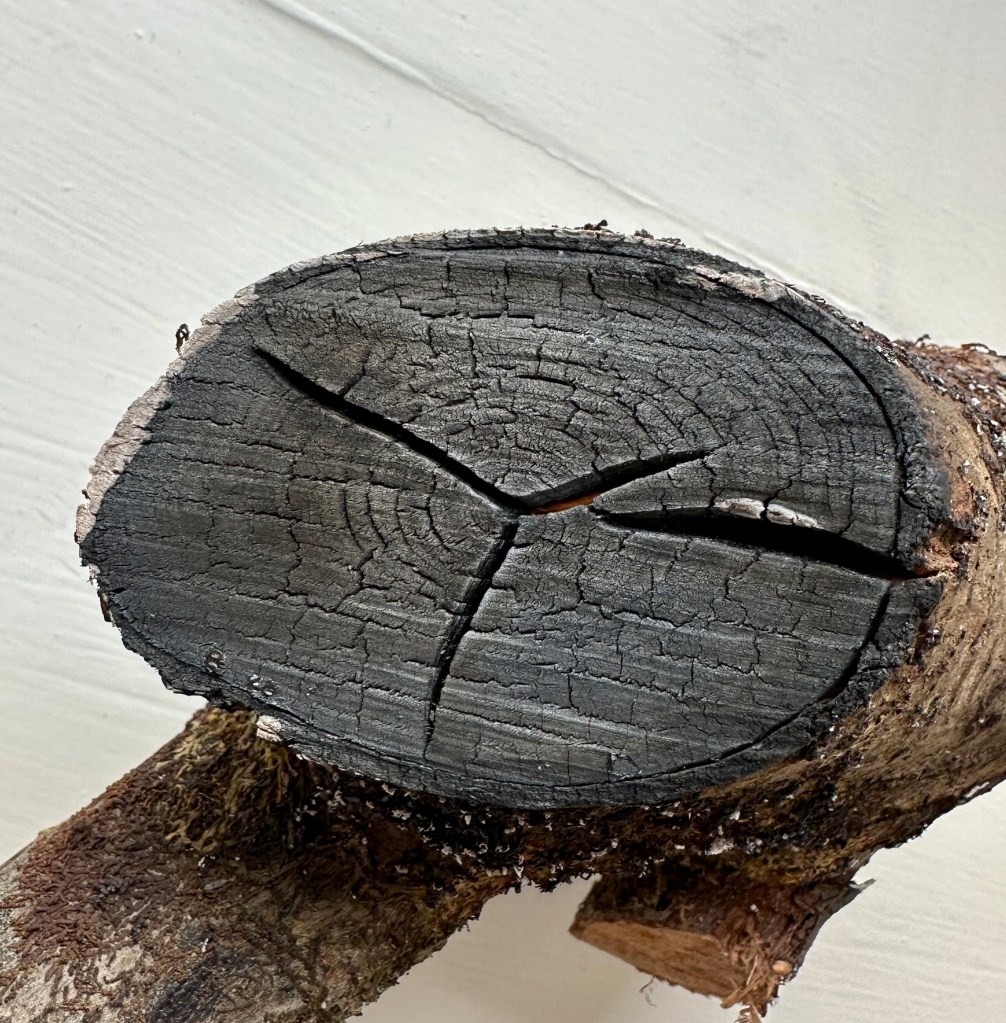
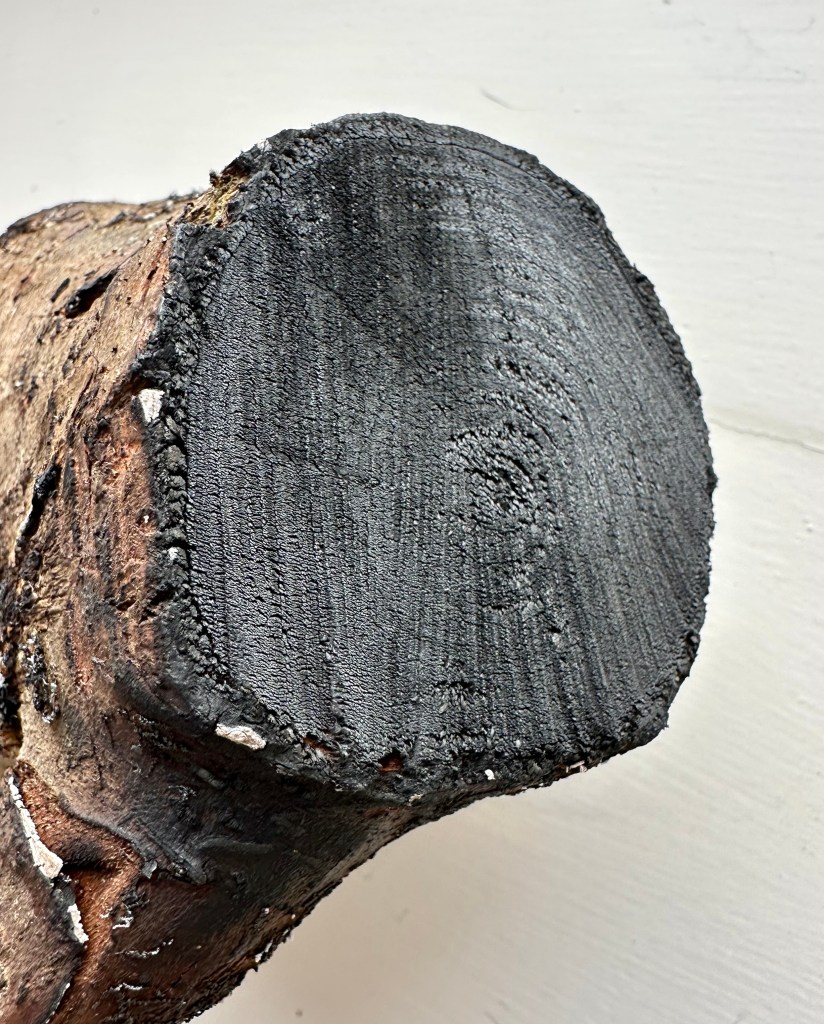
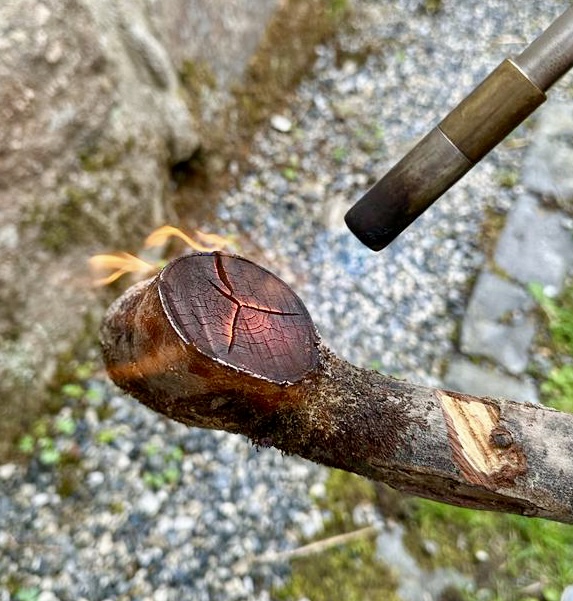
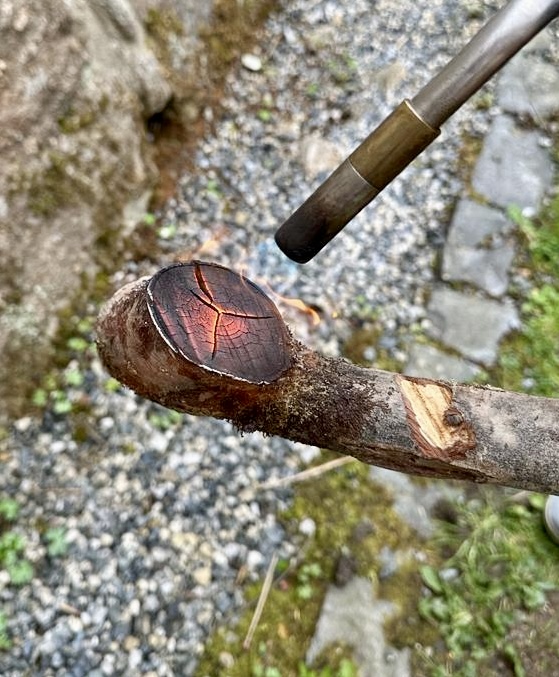

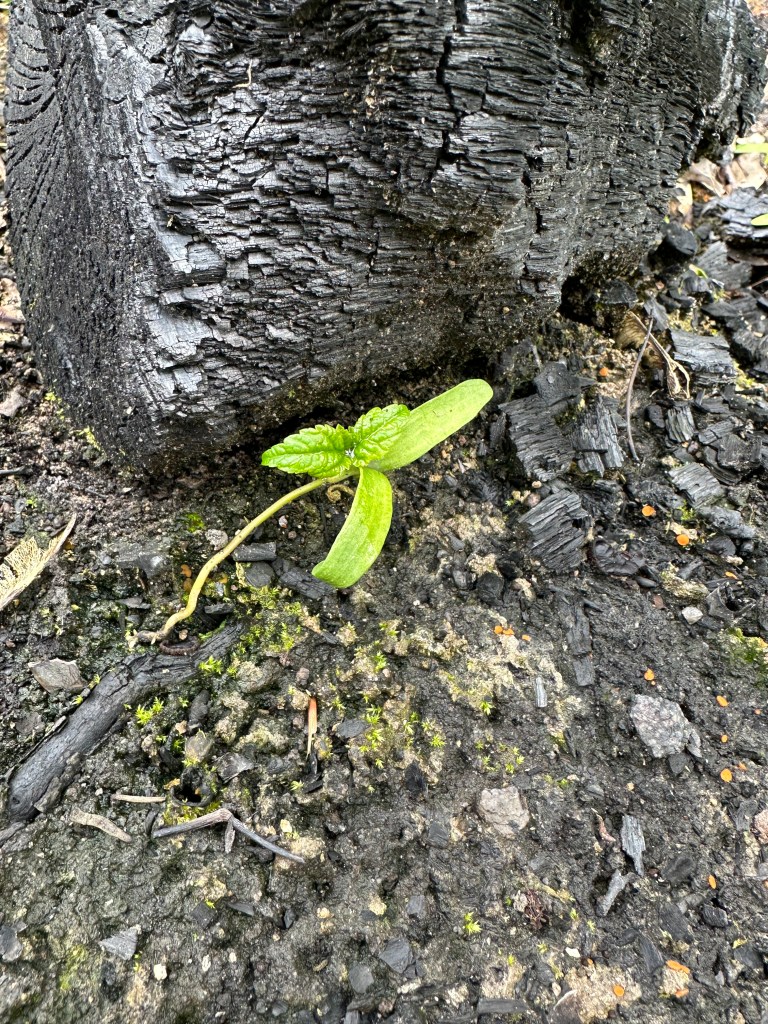
30.4.23 Photographed new sprig of green growing through a charred, barren patch of earth. I was struck how new life, new hope and renewal is everywhere and unstoppable if you avail yourself of it.


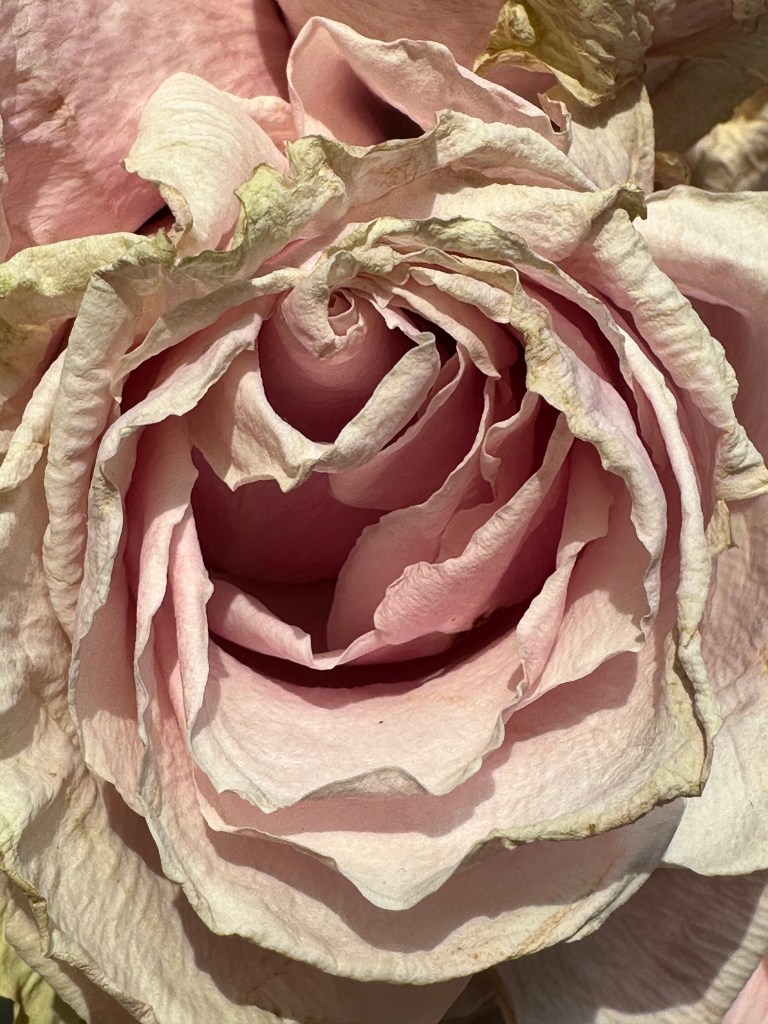
3.5.23. I’ve taken photographs of flowers that are dying and ordinarily might be thrown out but they have a beauty and fragility that was not there when they were vibrant young blooms.


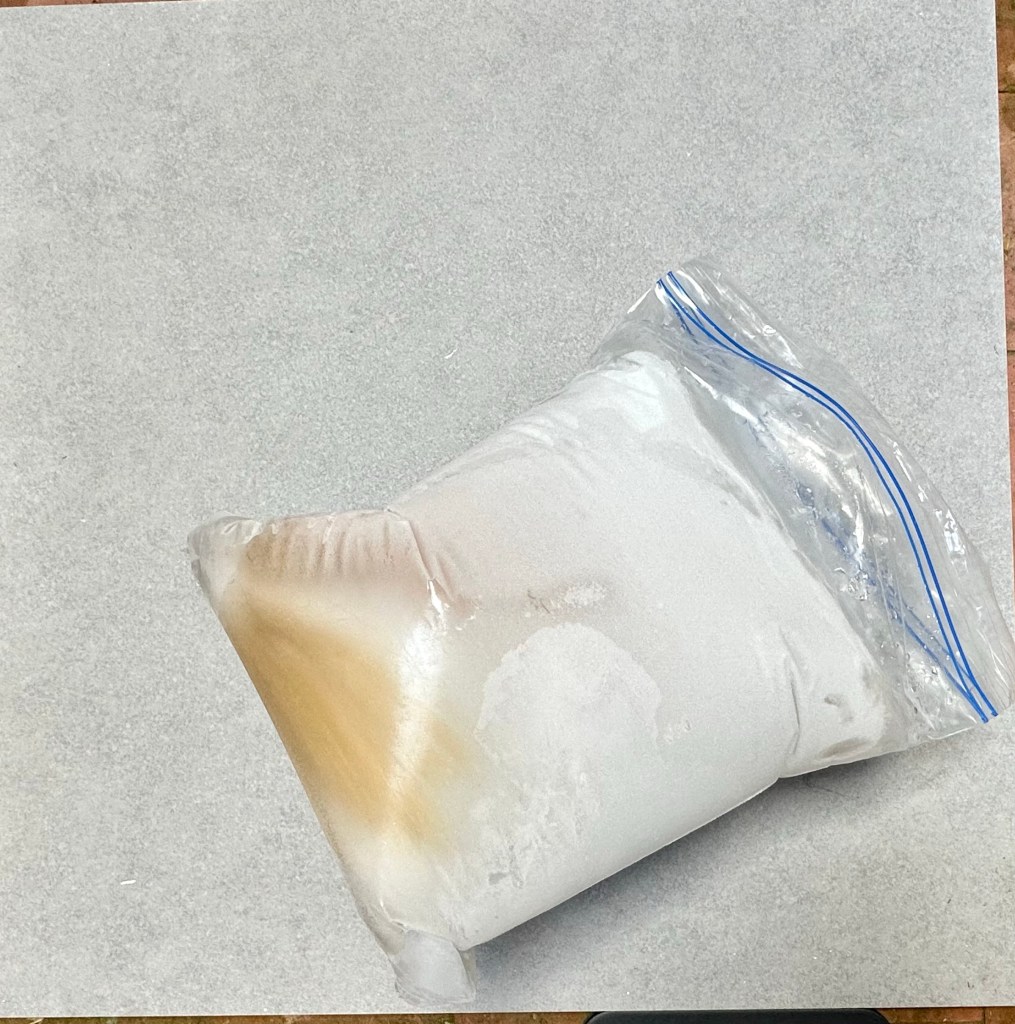
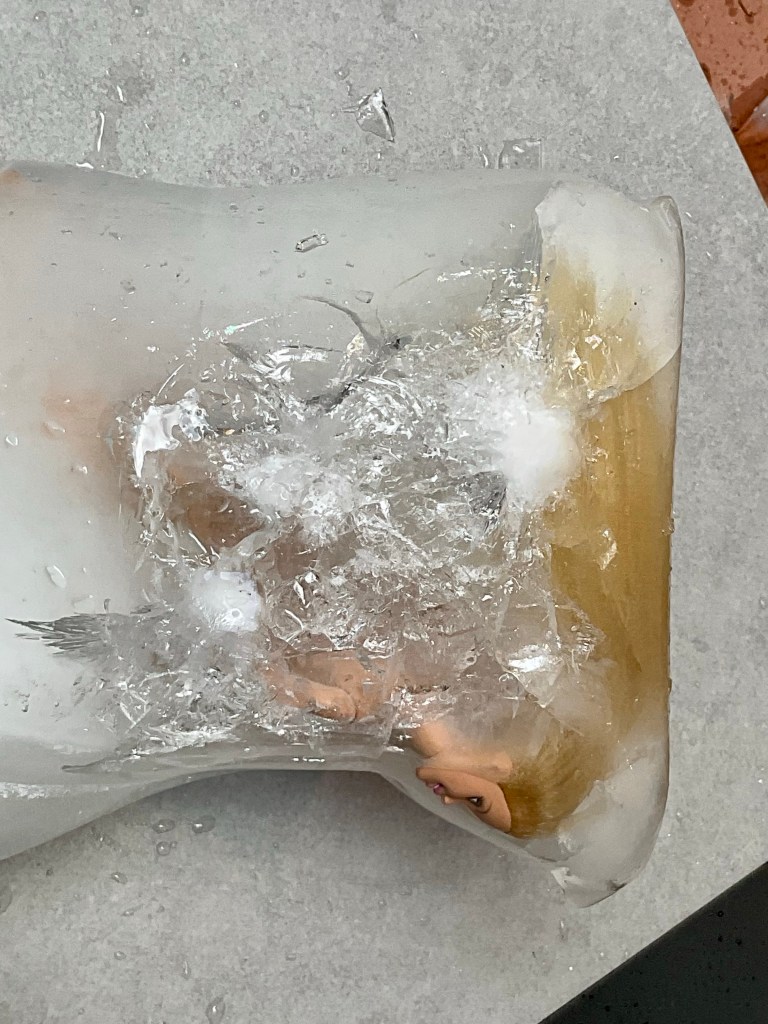
7.5.23 I took ice block of Barbie out of freezer and filmed it melting. even with a hot air blower it was taking forever so I started to smash the ice with a hammer. It felt symbolic that I she should be free now having spent a life of waiting. I videoed and photographed this



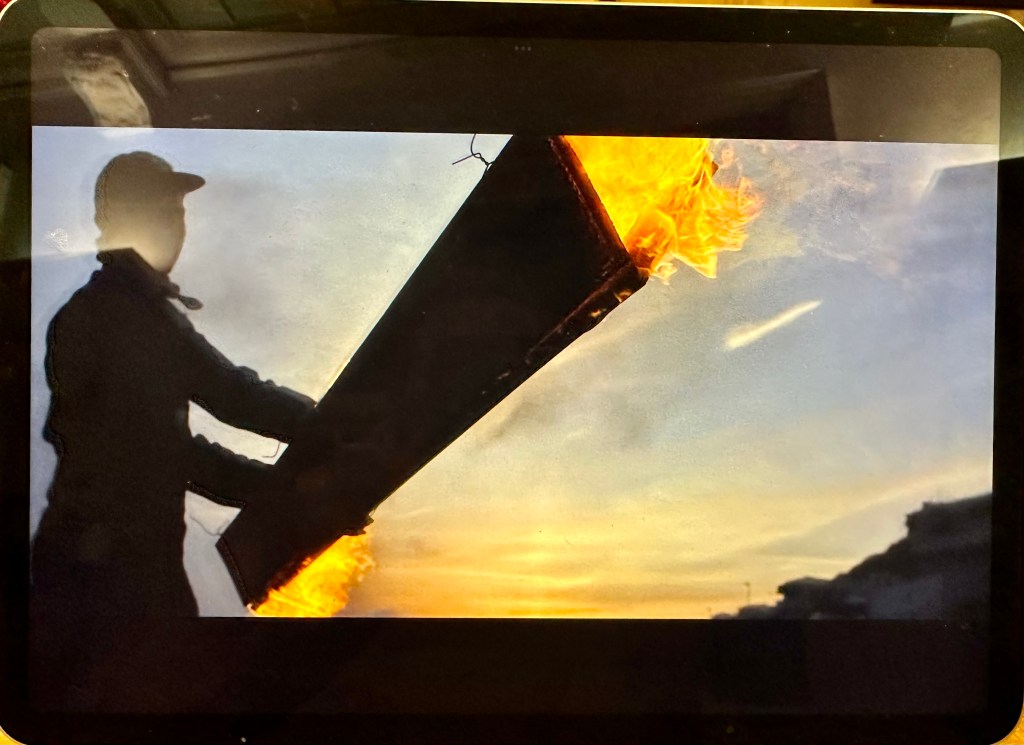
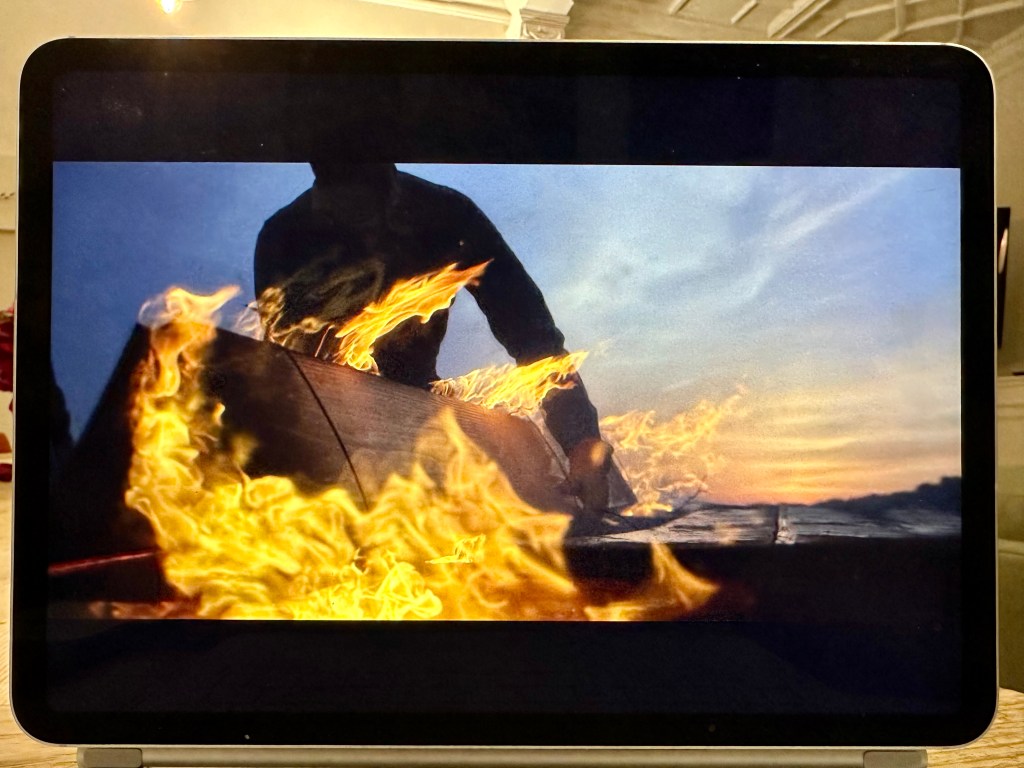
8.5.23 I watched a documentary called ‘Soot House – Home’ on Apple TV about building an off grid house using the ancient Art of Yakisugi. I loved how the ritual of charring the wood connects you with the home you build from it and burning the wood only makes it stronger. This resonates with my theme of Let it Burn

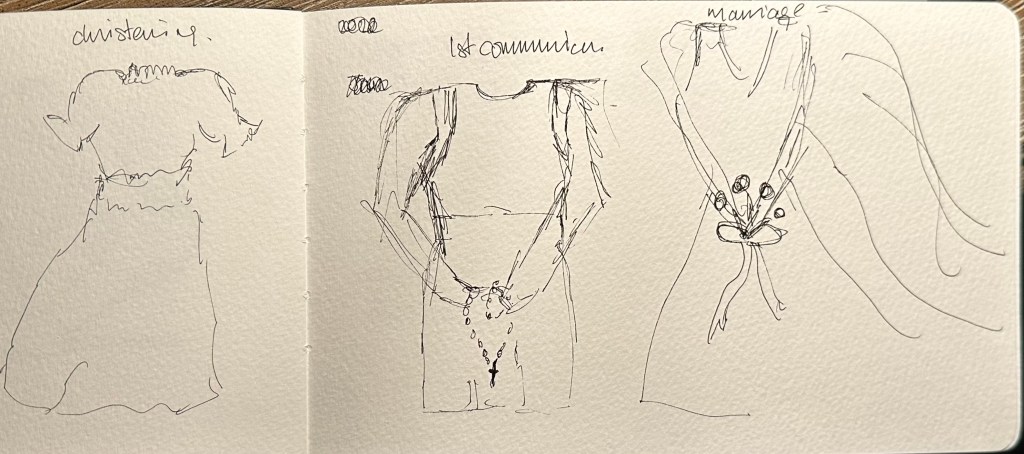
14.5.23 I had an idea about taking a christening dress, a first communion dress and a wedding dress – all traditionally white, all about purification and being ‘pure’ and the absolute embodiment of the female gender role – starting from Eve, the temptress who committed the first ‘sin’. I like the idea of suspending these dresses into red or green ink and the fabric to suck up the colour. I want it to represent the life and truth of a girl or woman and that truth will always seep through and that the white ‘straight jackets’ of convention, stereotype, sexuality and religion are flash and, try as they might, they cannot bleach out life.
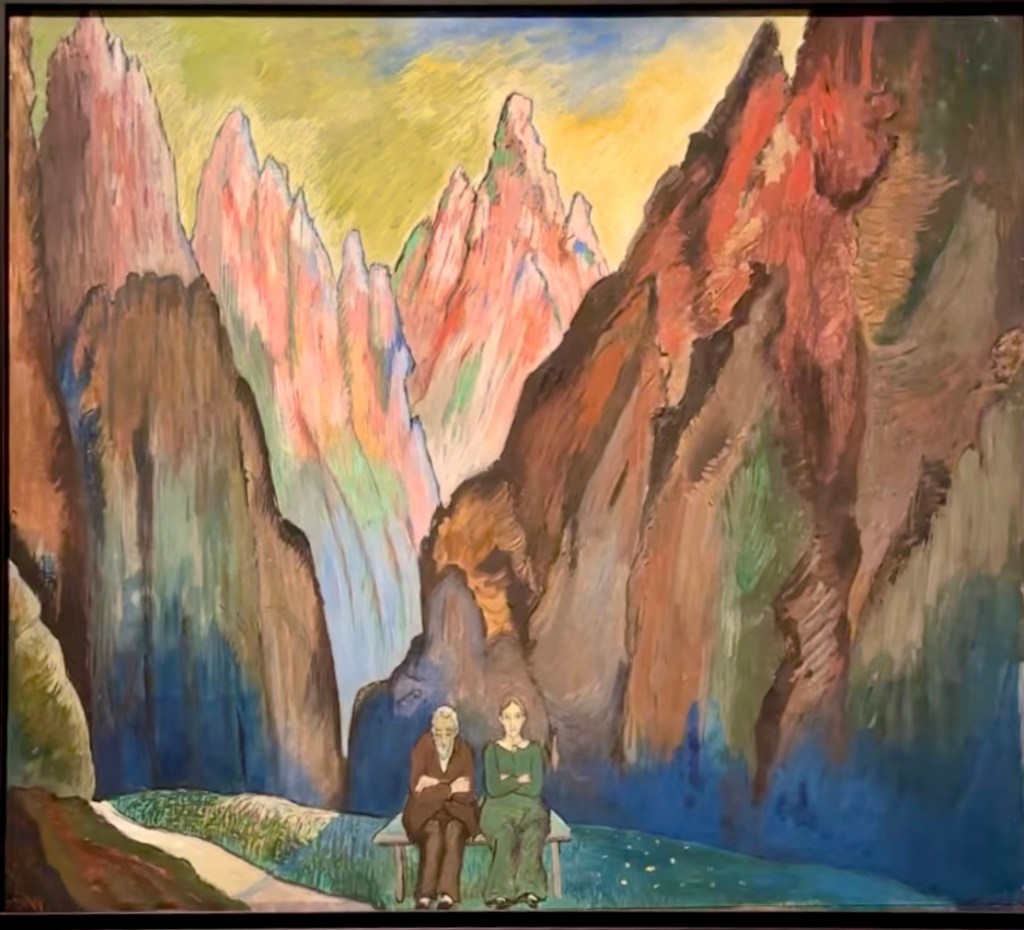
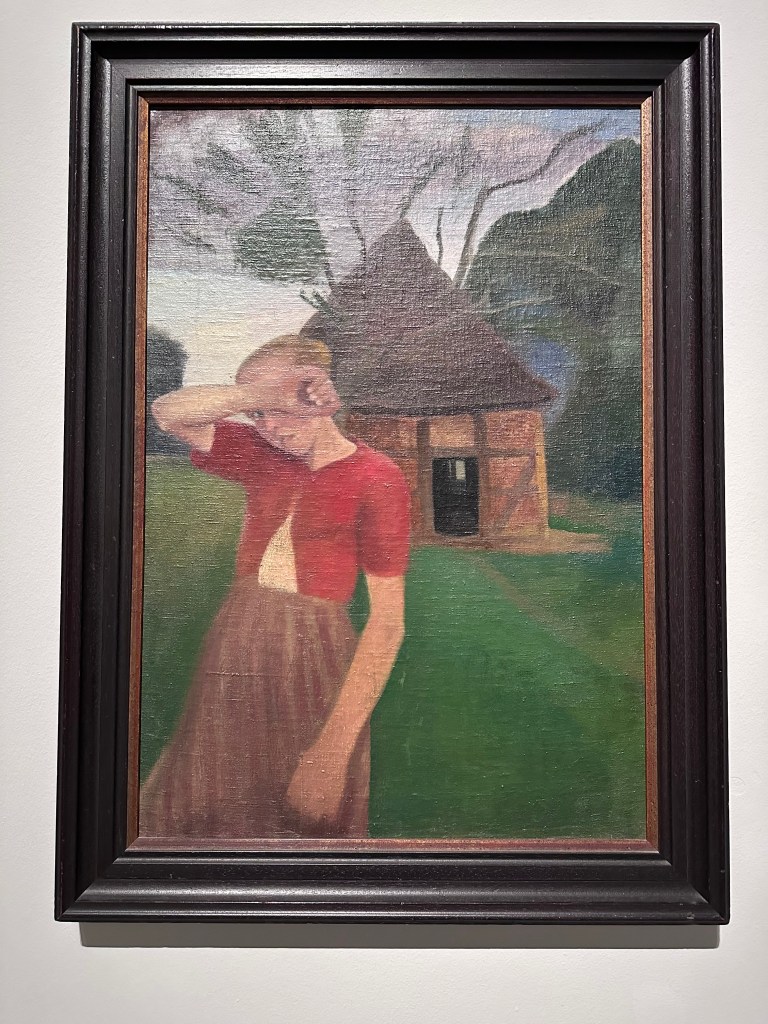
Looking through pictures I have taken of exhibitions I have visited looked at threads of what I was drawn to and what interested me. I’ve put a few images here but they are quick snaps I took without noting the artist so I am unable to identify and add to images. It has been a lesson to me that in future I will make sure I take a pic of the artist too.

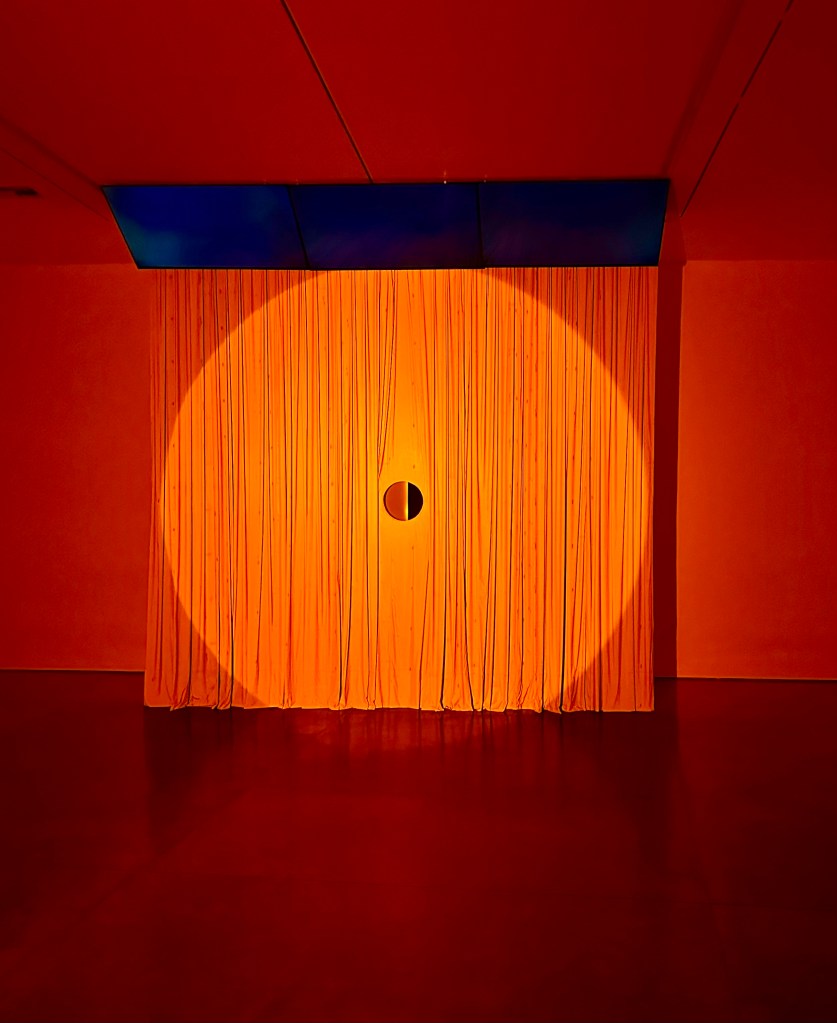
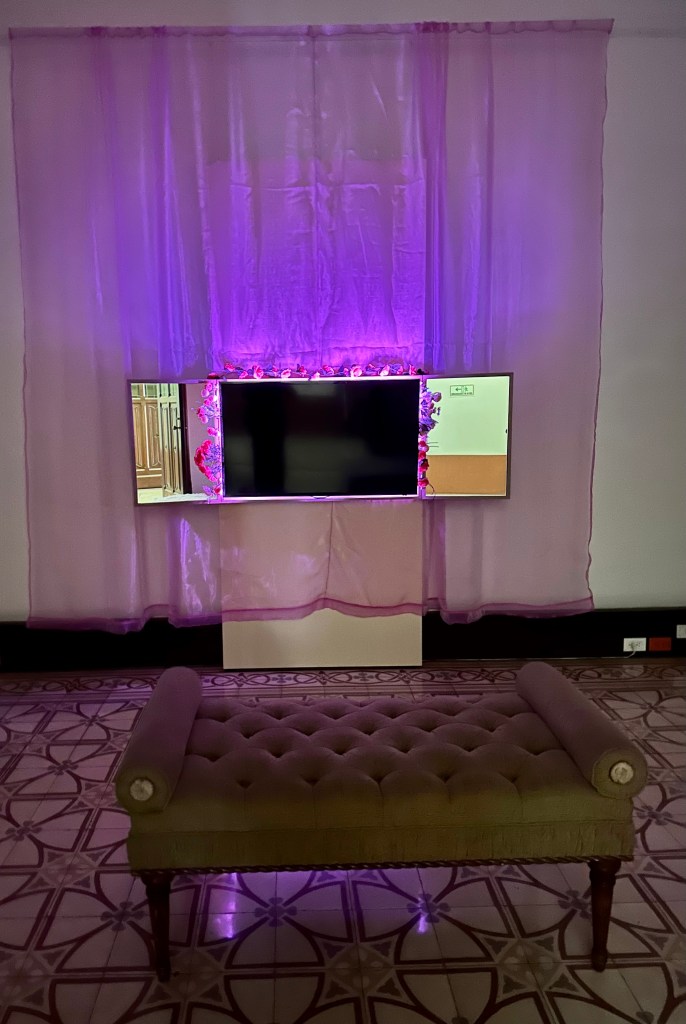
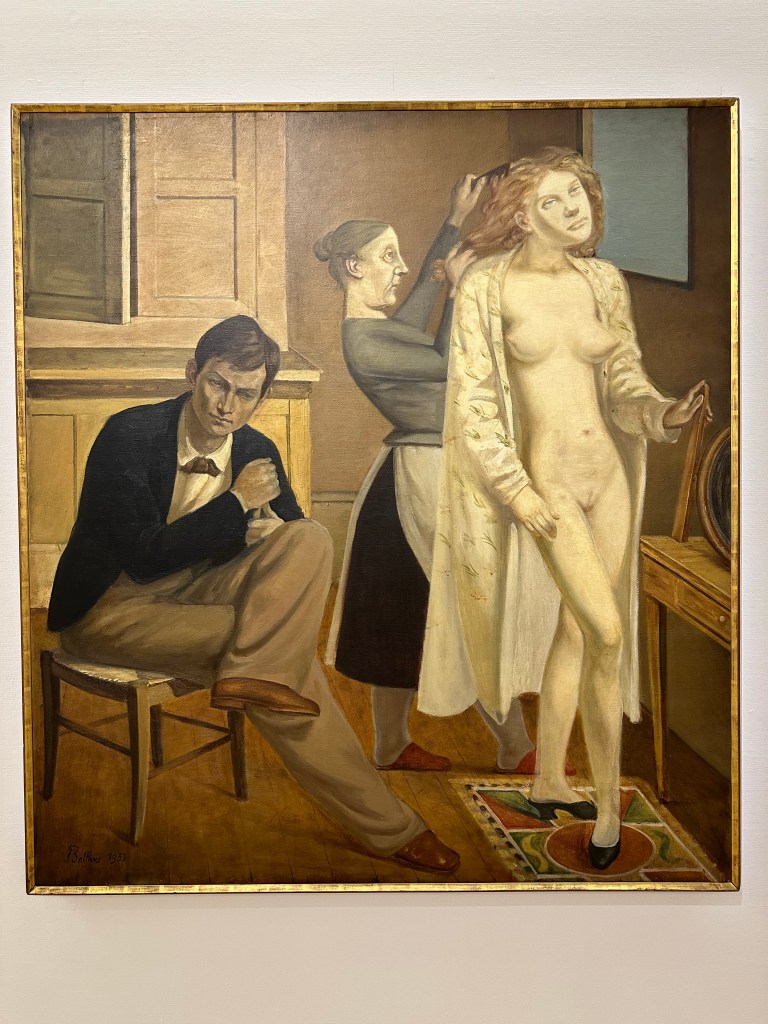
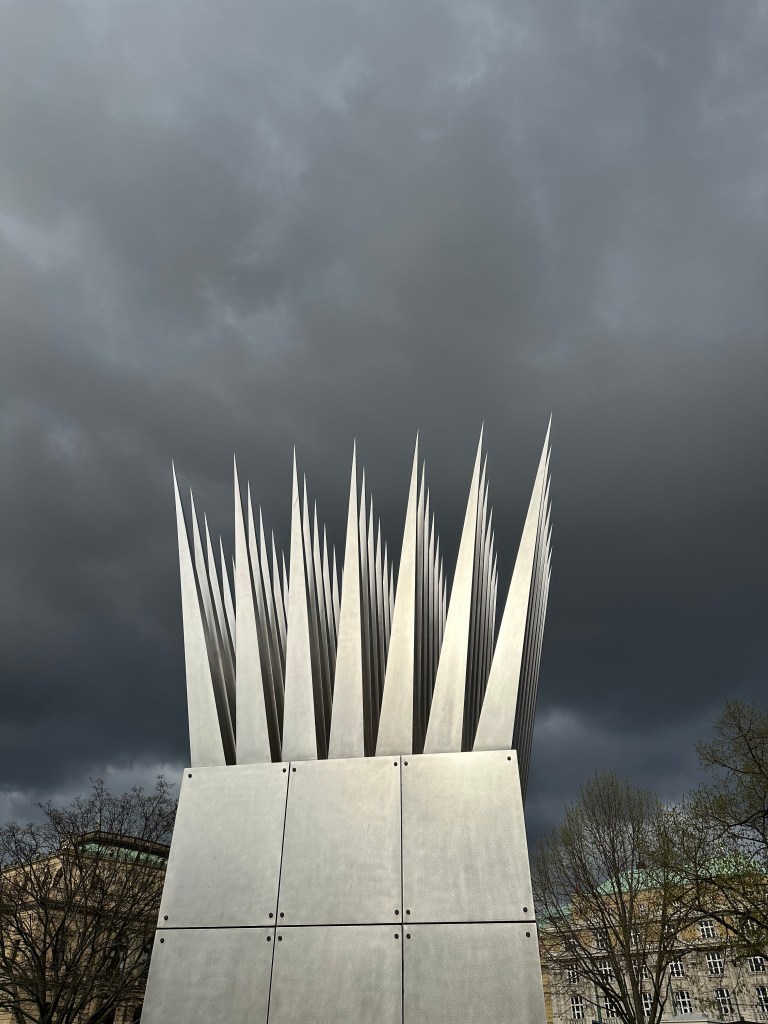
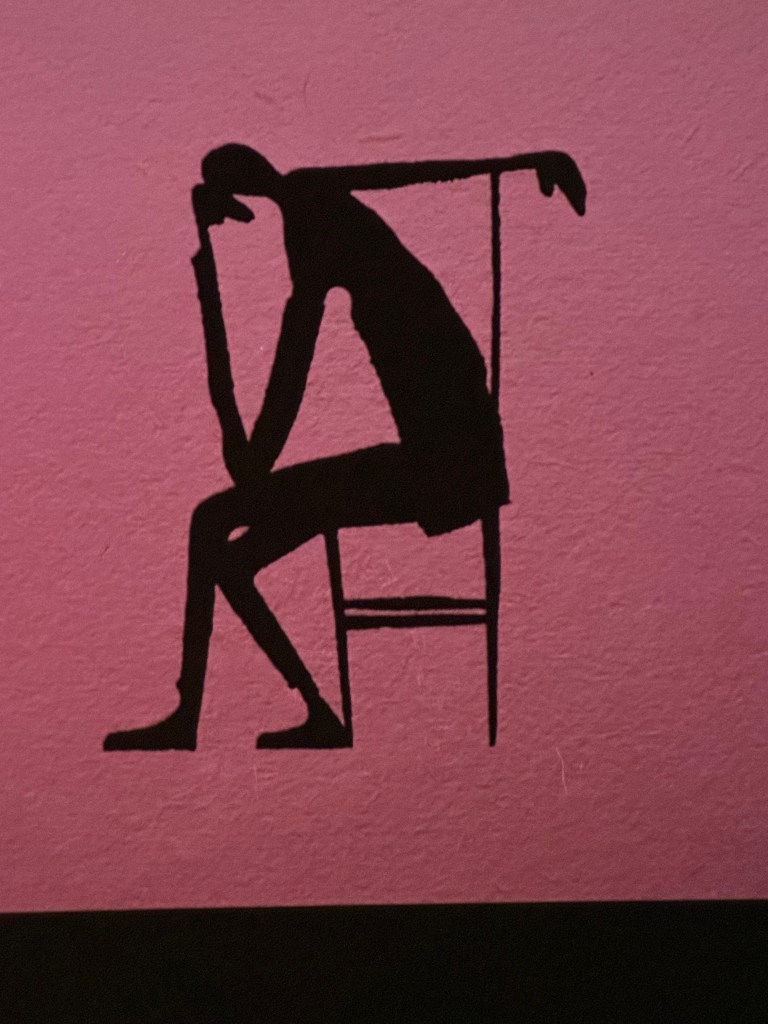

14.5.23 A few years ago I saw an exhibition at the Tate Britain where the artist had suspended long swathes of silk from wire circles and they hung down into bowls of dye.

The Filters. Christina Mackie. Tate Britain 2015
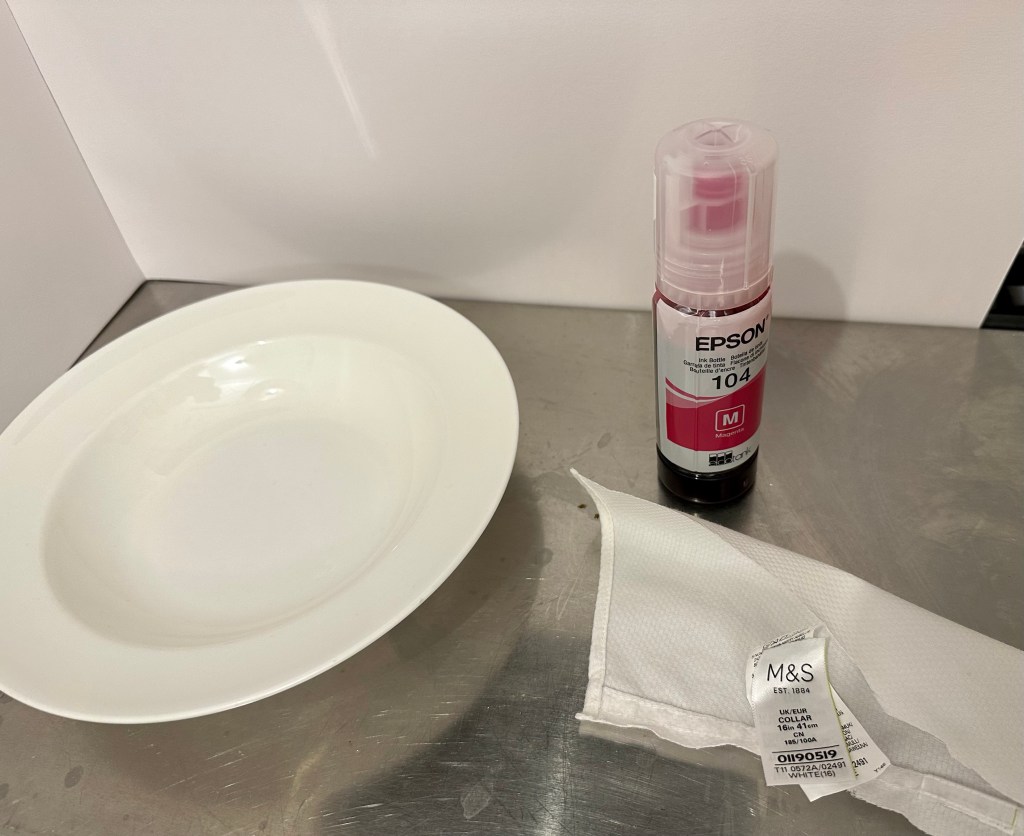
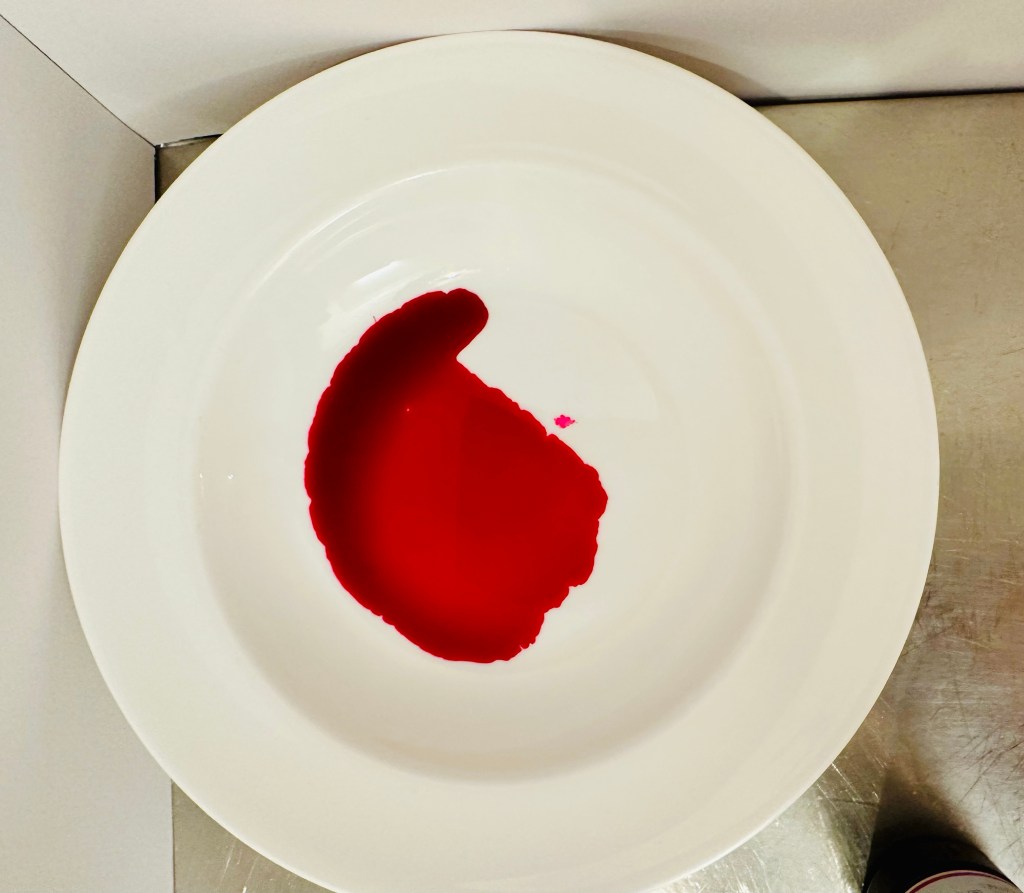
This is part of my inspiration for experimenting with this idea. My first attempts are with printer ink mixed with water and dipping in strips of cotton shirting material. I noted that the dye creeps up the seam more quickly than the flat material which suprised me but was good research info.


Finally ideas are coming together
I am feeling drawn to using the white ceremonial dresses that are used in Christenings, First Communion and Marriage.
I am not trying to make a comment on religious beliefs but I want to use the dresses as a symbol of the gender expectations of women in a patriarchal society and suppression of individuality of girls and women. The message of “not being good enough as you are” and the feelings of shame are what I want to destroy by using these dresses as a metaphor and “Let them Burn”
Baptism: Sinners. Because babies are born with original sin, they need baptism to cleanse them. First communion: because they are receiving Jesus’ blood and body for the first time The Church instructed parents to ensure that their children were “suitably attired” for communion. “Our souls become the bride of Christ. That is why girls wear white dresses” Communion thus was a feminized ritual for girls focusing on the body, clothing, and appearance. Marriage: Traditionally, the white dress and veil are symbolic of chastity, purity and obedience to God.
 number5portfolio.com