
LOUISE NEVELSON
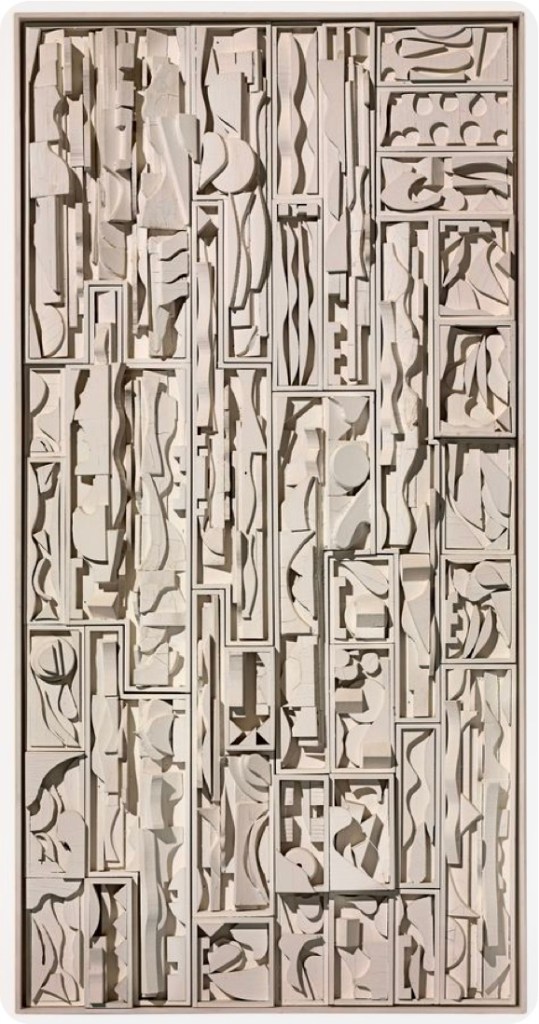
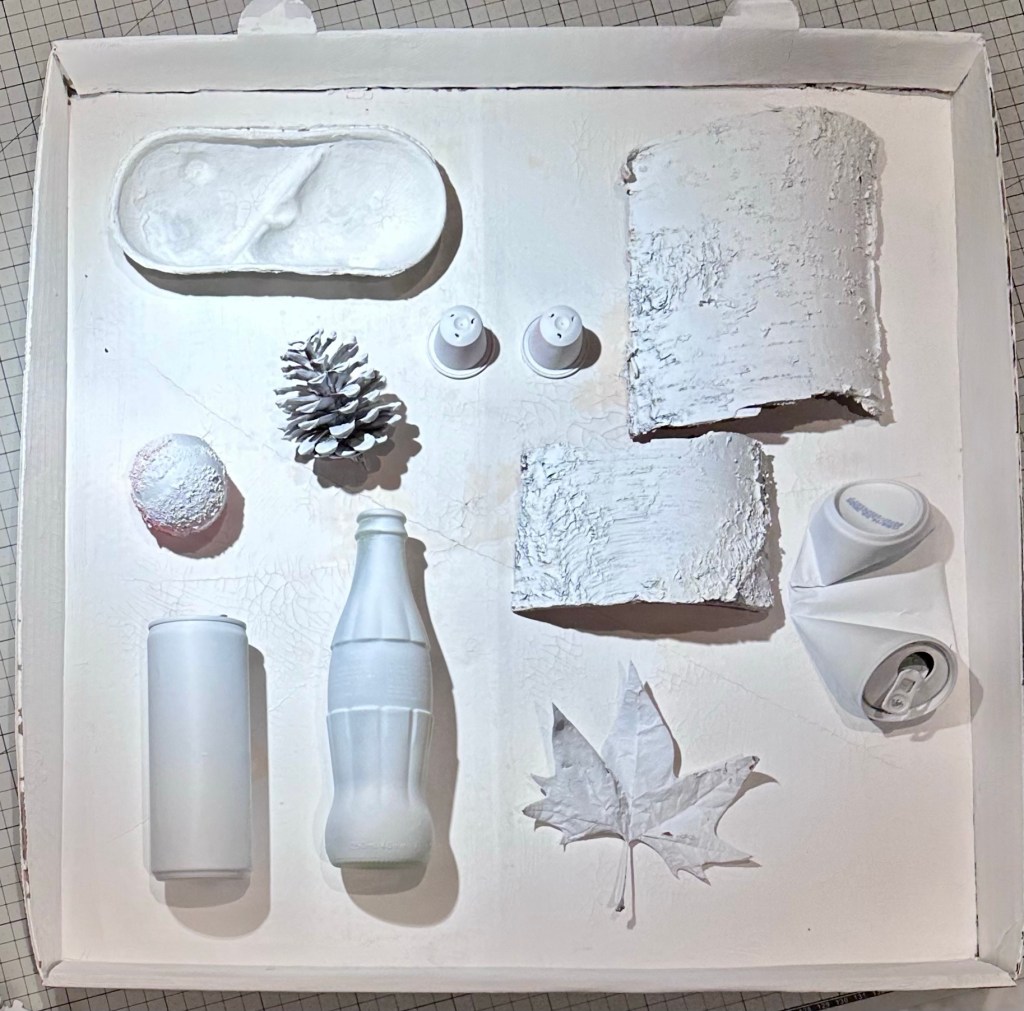
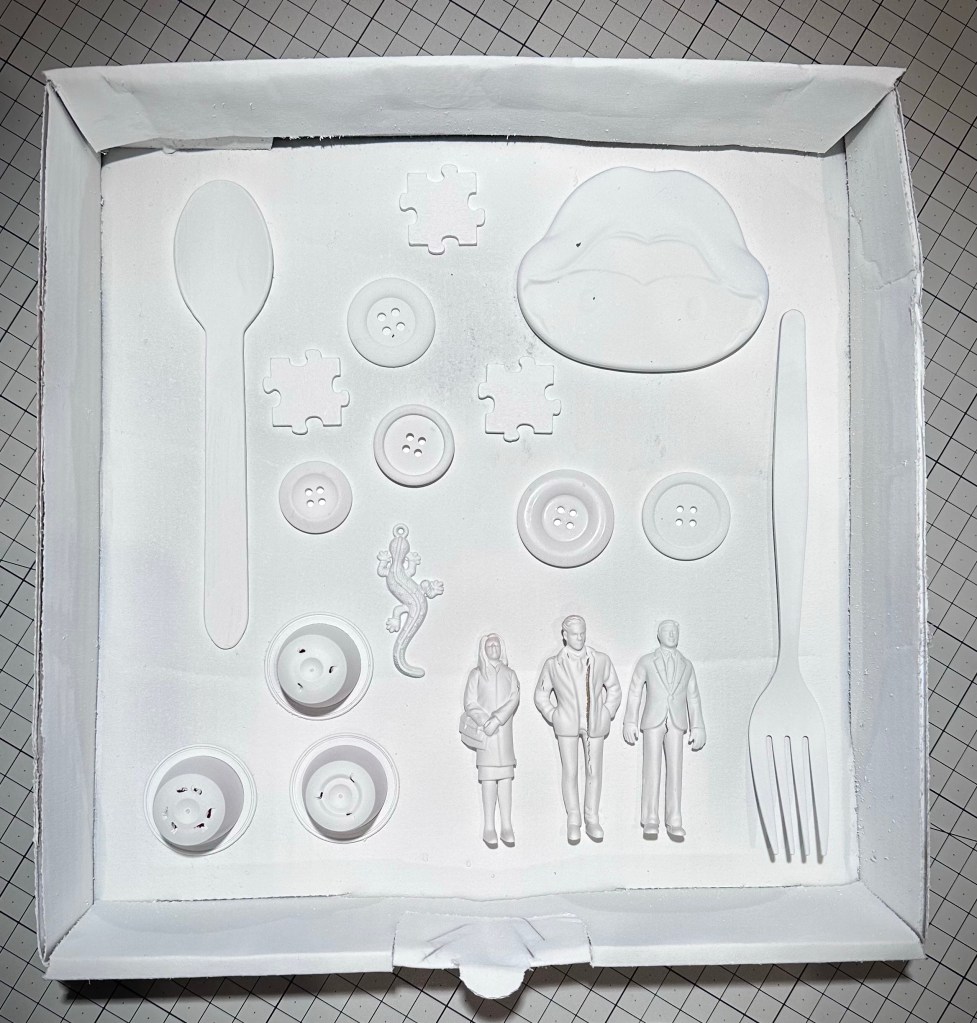
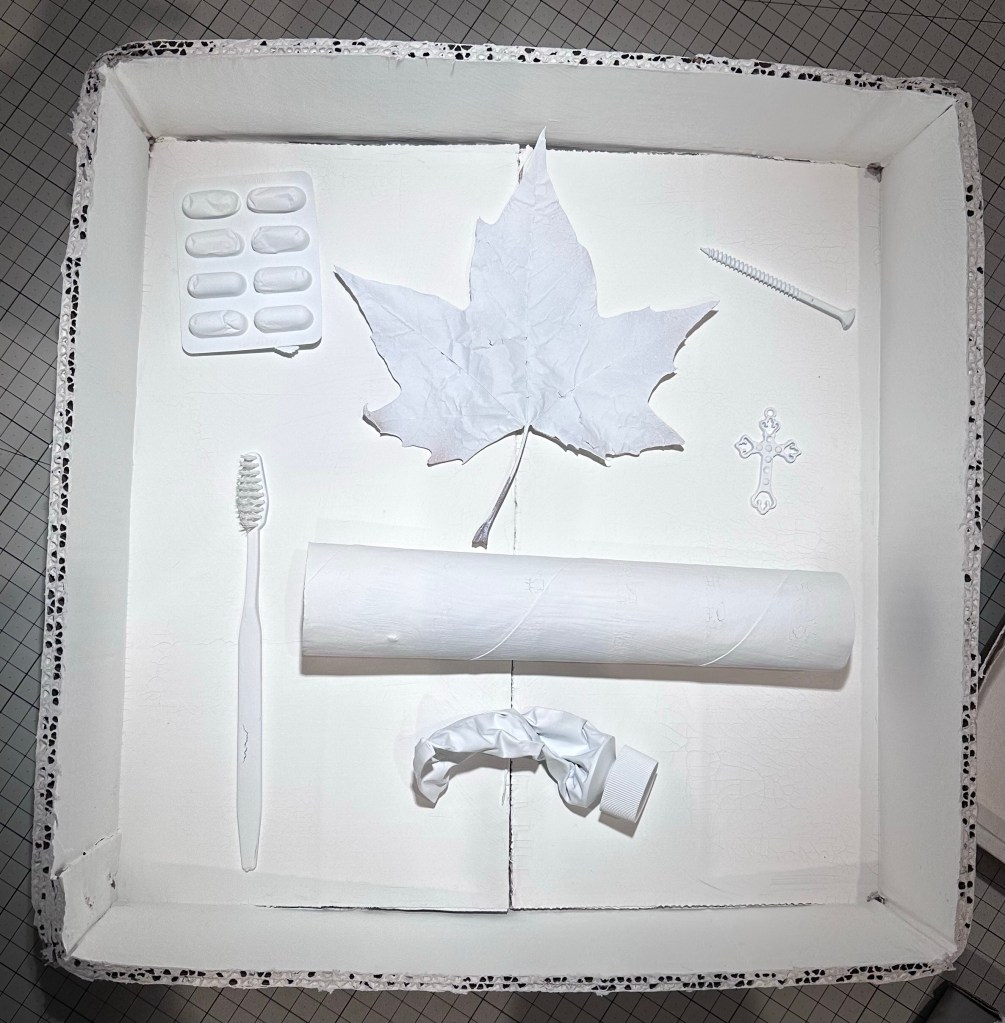
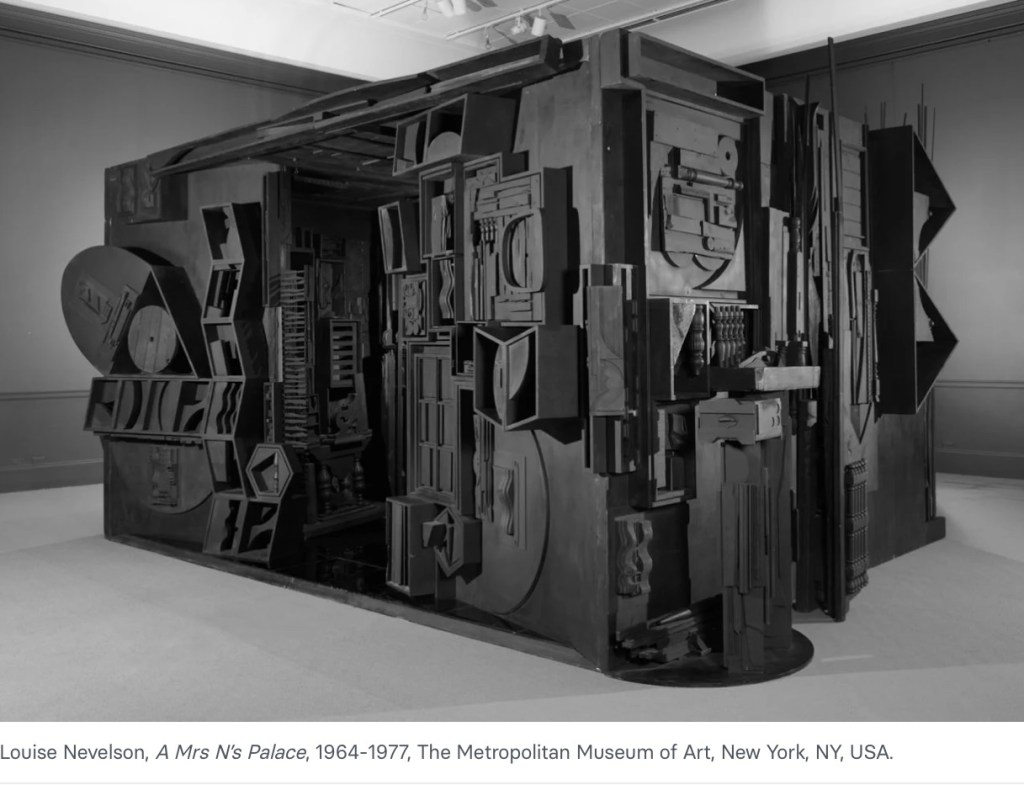
For an earlier module I had looked at Louise Nevelson and inspired by her assemblages I created monochrome boxes of found objects. Nevelson made her assemblages usually out of wood, using scraps she found lying around the city and other “urban debris.” She created uniformity by painting it all one colour, usually black or white.
Nevelson was born in Russia but moved to Maine, US when she was 6 years old. Her father ran a lumberyard and she grew up playing with scraps of wood from the yard. She moved to NY when she was 21.
She studied Cubism and collage in 1931-32 which greatly influenced her work. She also assisted Diego Rivera on a mural project. She used wooden objects that she gathered from rubbish piles to create her sometimes huge installations. Her process was influenced by Marcel Duchamp who had been creating sculptures using found objects.
Nevelson had a solo exhibition in 1941 but she did not develop her signature wooden assemblages until the late 1950s.
She put together abstract compositions using bits of discarded wood and composing them boxes she scavenged. She would stack these almost like bricks, to form walls or and enclosure. She gives them uniformity but painting them a single colour. She also salvaged small pieces of wood from old buildings, then nailed and glued these pieces into box-like cubbies and arranged these into a wall.
I find it interesting that she painted everything one colour and it speaks to me of a need for order and calm. Apparently she kept two studios; one for the black work and one for the white. Again this ‘neatness’ sits in opposition to the chaos of rubbish and city trash where she salvages her items. She turns these unwanted, discarded items into something beautiful and gives them a purpose.
Her sculptures are sometimes monumental, creating whole rooms.
JOSEPH CORNELL
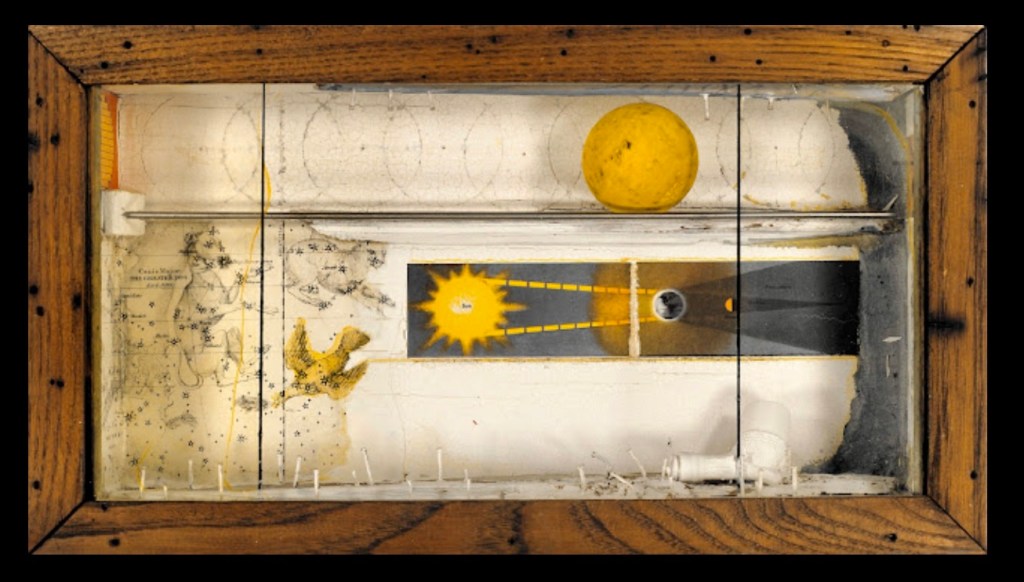
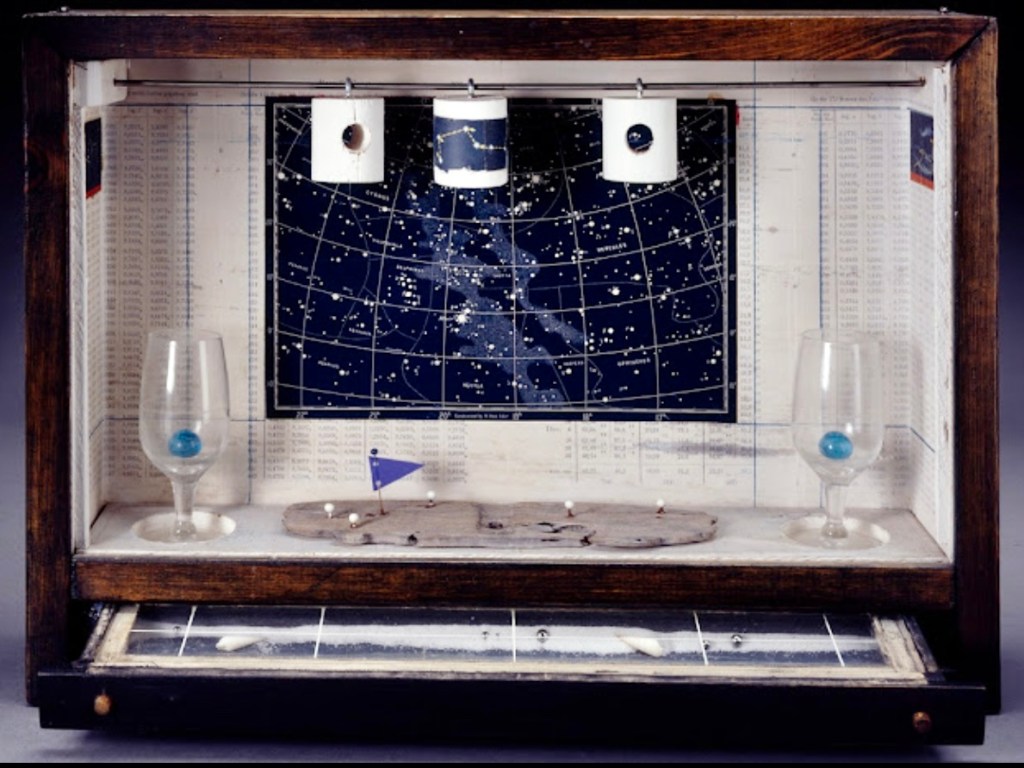
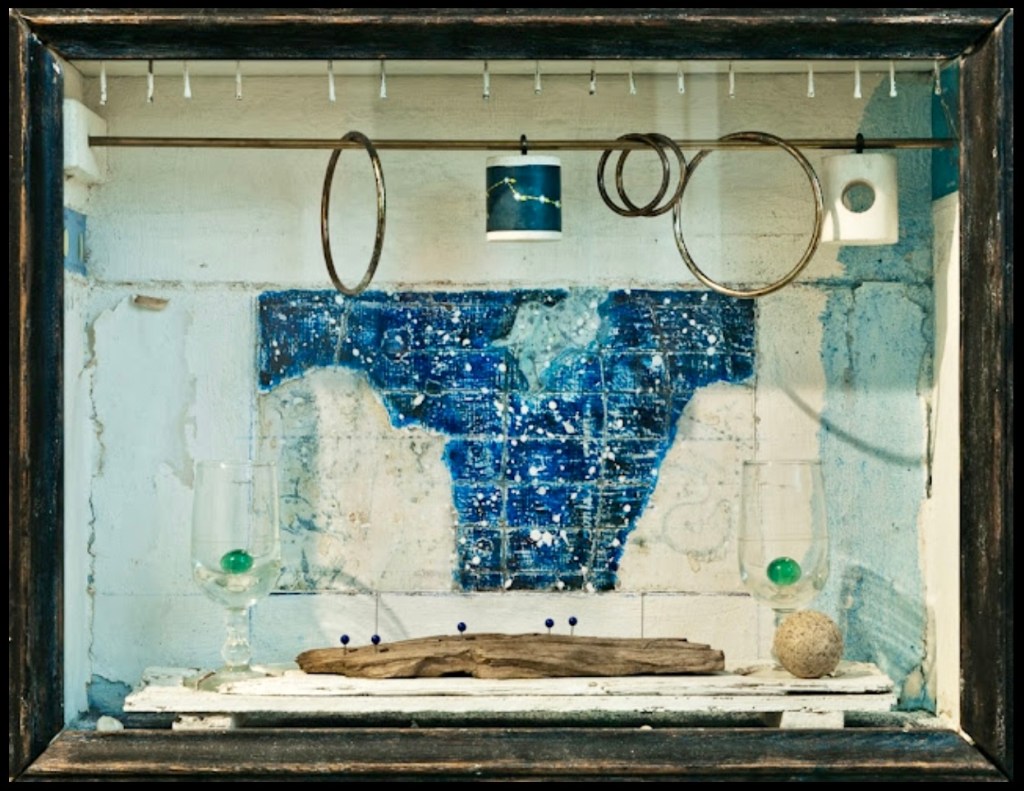
“Gratitude, acknowledgment and remembrance for something that can so easily get lost” One of the last entries in Cornell’s diary before he died in 1972, he is perhaps describing beautifully why he made his assemblage boxes.
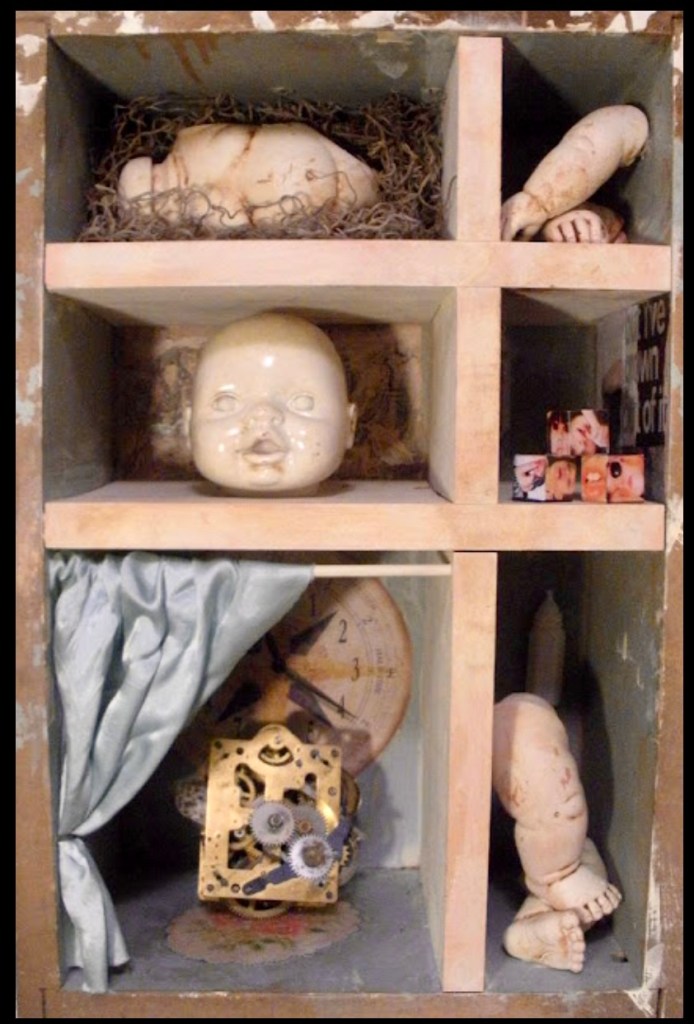
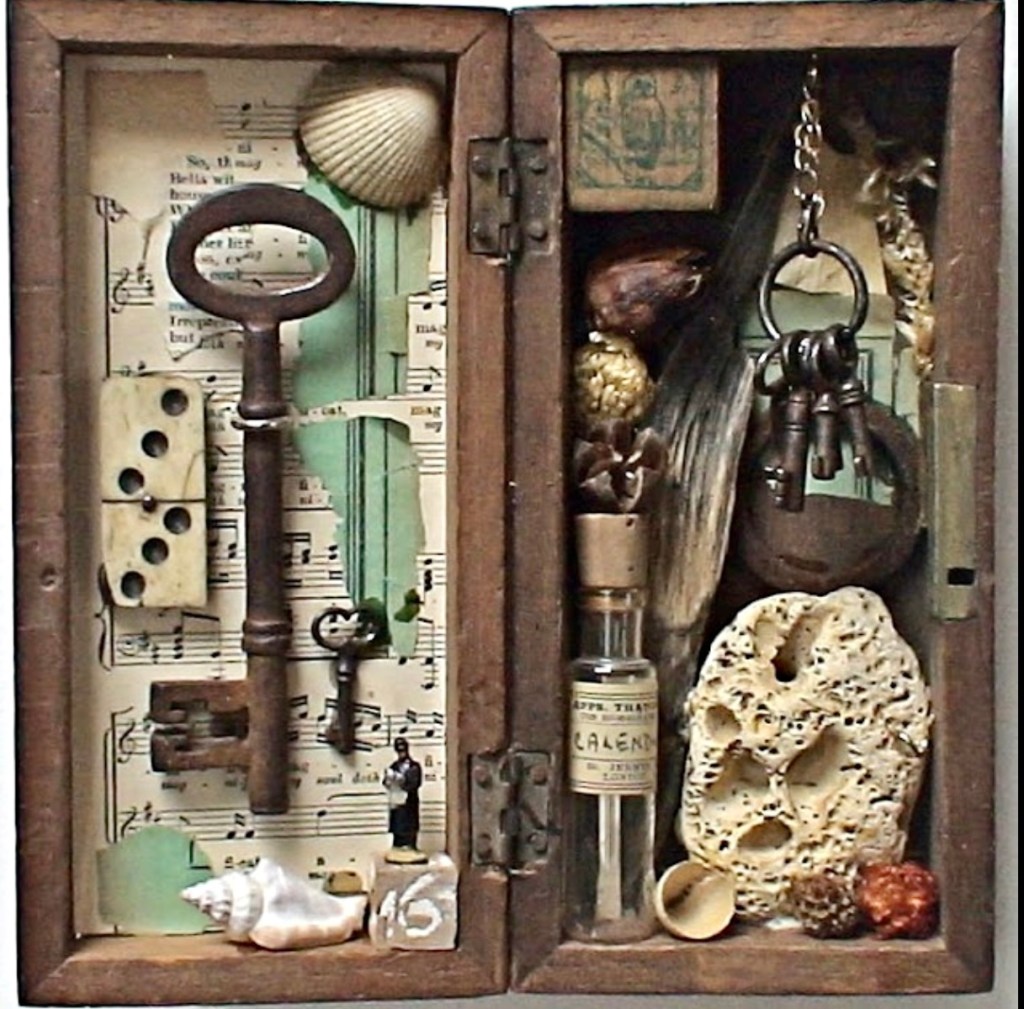
Cornell always lived with his mother and his younger disabled brother. He saw Houdini perform when he was a boy and his boxes that he only started to create when he was in his thirties, often symbolise expansiveness, freedom and flight: skies, moons, dancers, birds etc. But they are locked away in a box.
Maybe in some way Cornell’s boxes are a representation of his own life, spent in a basement, never venturing into the world of marriage, or rarely even outside Manhattan.
Categorising and organising mattered to Cornell and he started to create folders on his favourite subjects crammed with cuttings and photographs of the ballerinas, opera singers and actresses he admired. Cornell called these files “A clearing house for dreams and visions” They were part research project, part obsession.
Cornell was a lonely man and I wonder if he kept his own life “in a box” and never took the risk of breaking out like Houdini did from his chains.
ARMAN (Armand Fernandez)
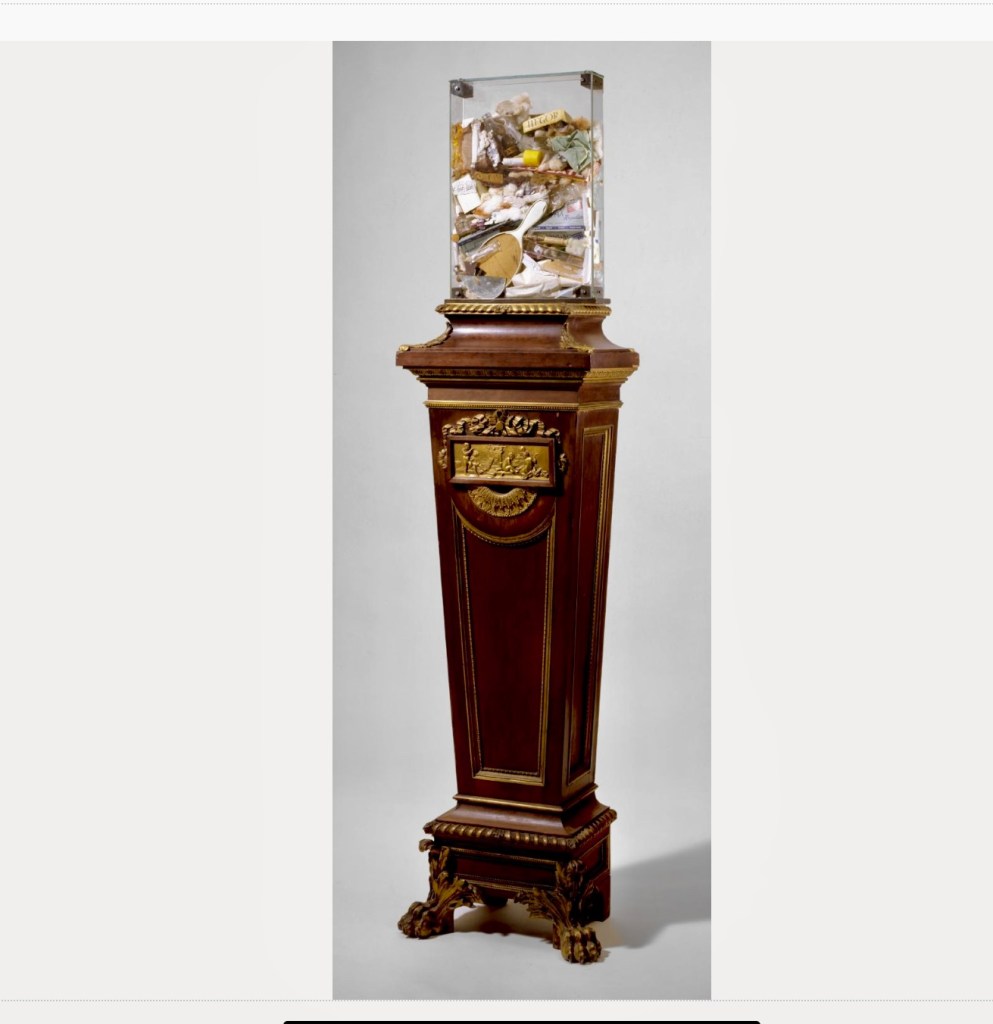
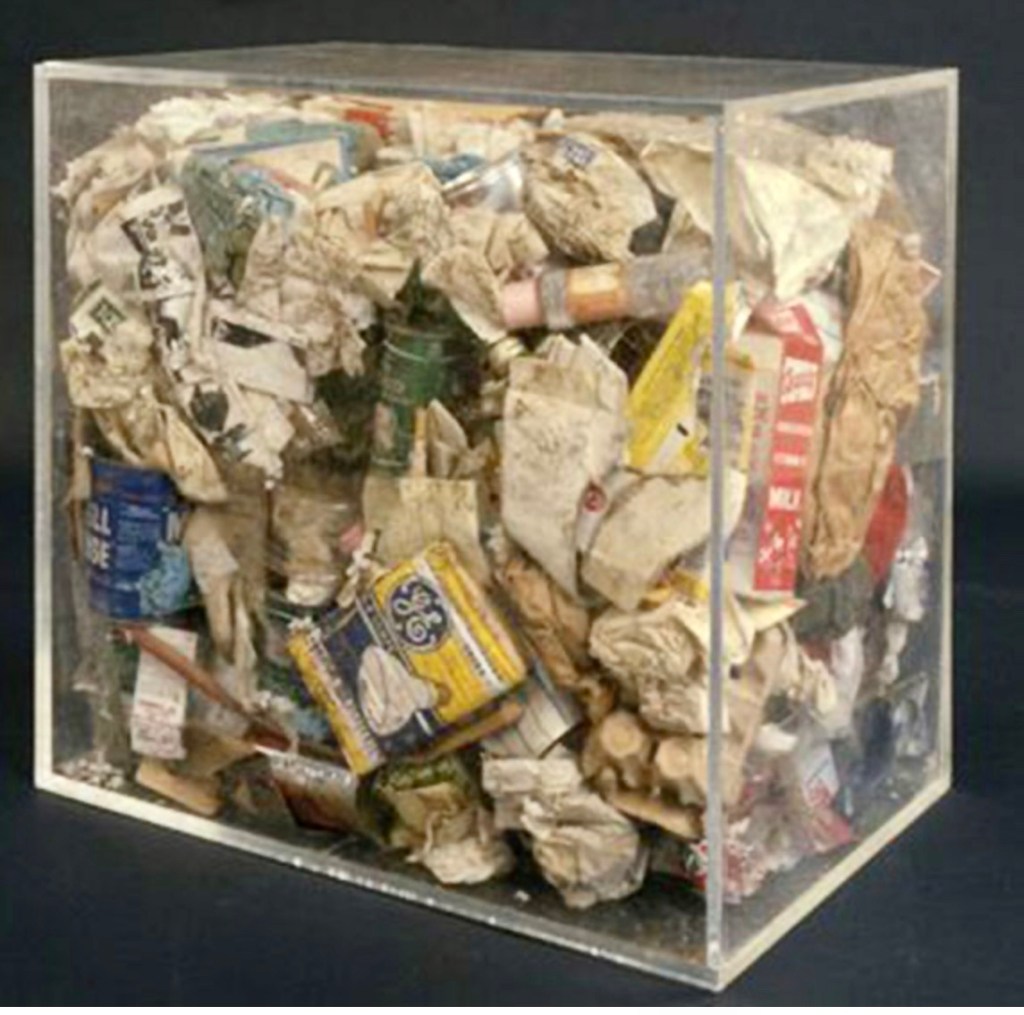
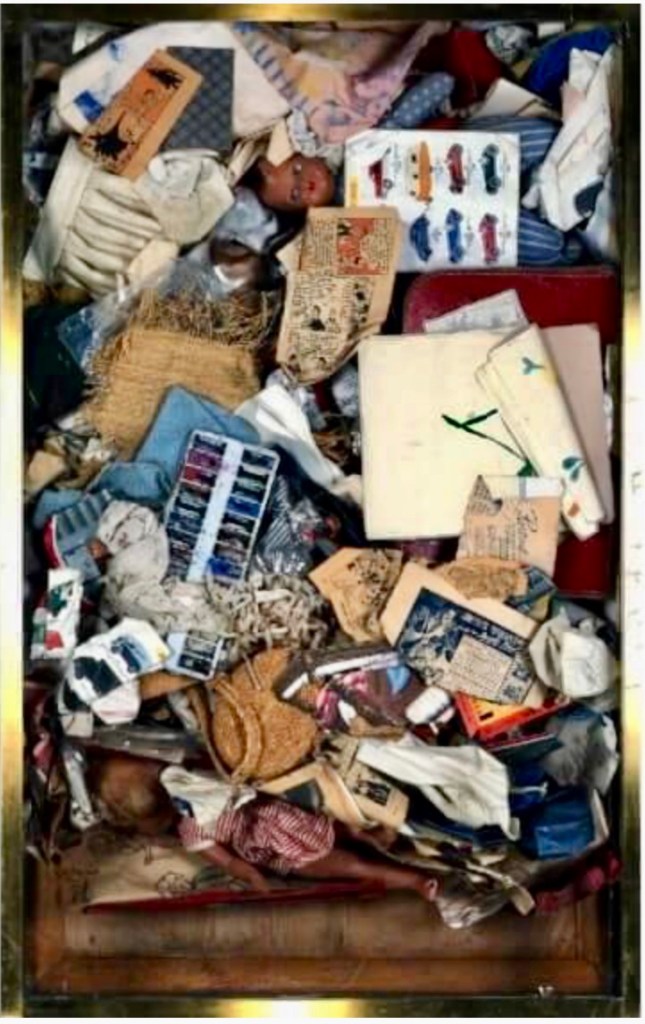
Arman was a one of the best know artists exploring Assemblage. He produced a series called ‘Poubelles” (French for rubbish bins) where he collected garbage and arranged it in plexiglass boxes.
In the image below, “Condition de la Femme 1” he has taken the contents of the bathroom bin in his wife’s bathroom and encases them in plexiglass and elevates them on a plinth to become art. He raises questions about bringing private things into the public domain and the image that society constructs of women.
PIERO MANZONI
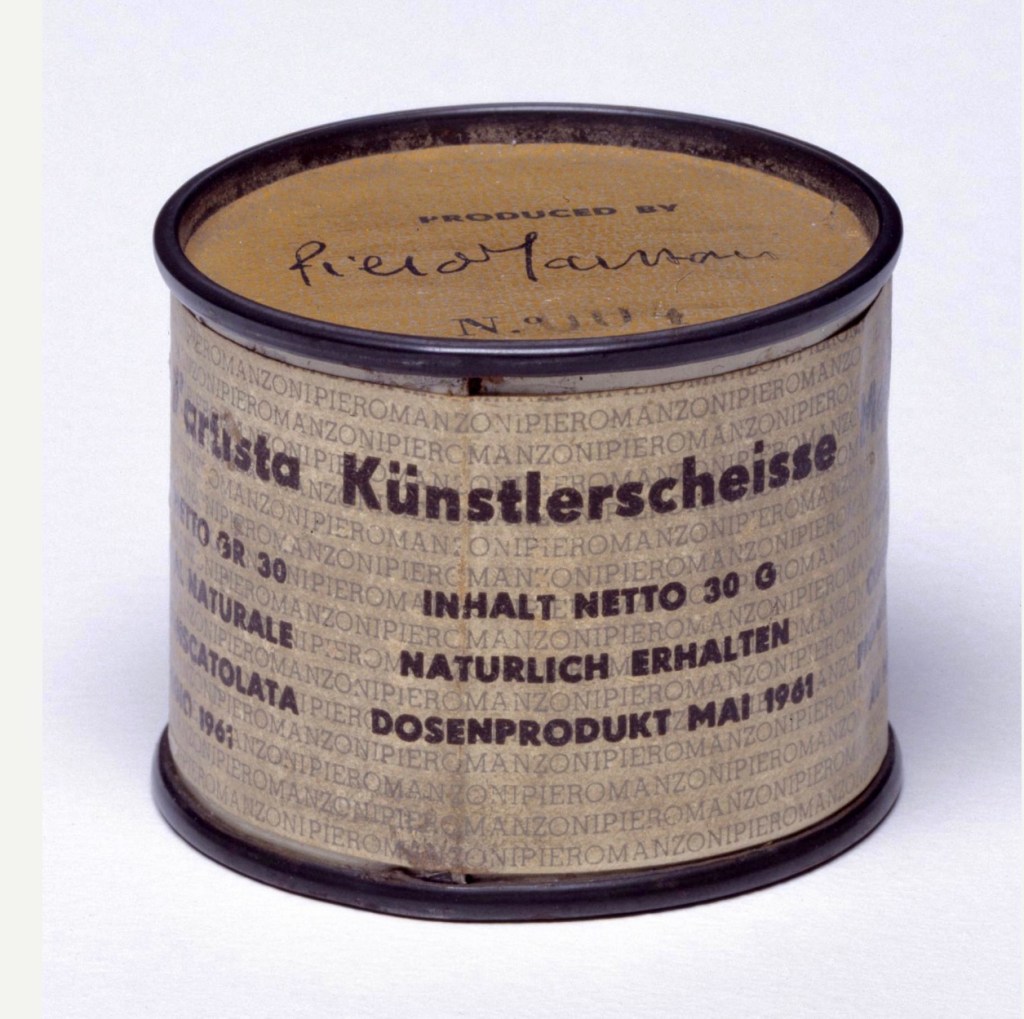
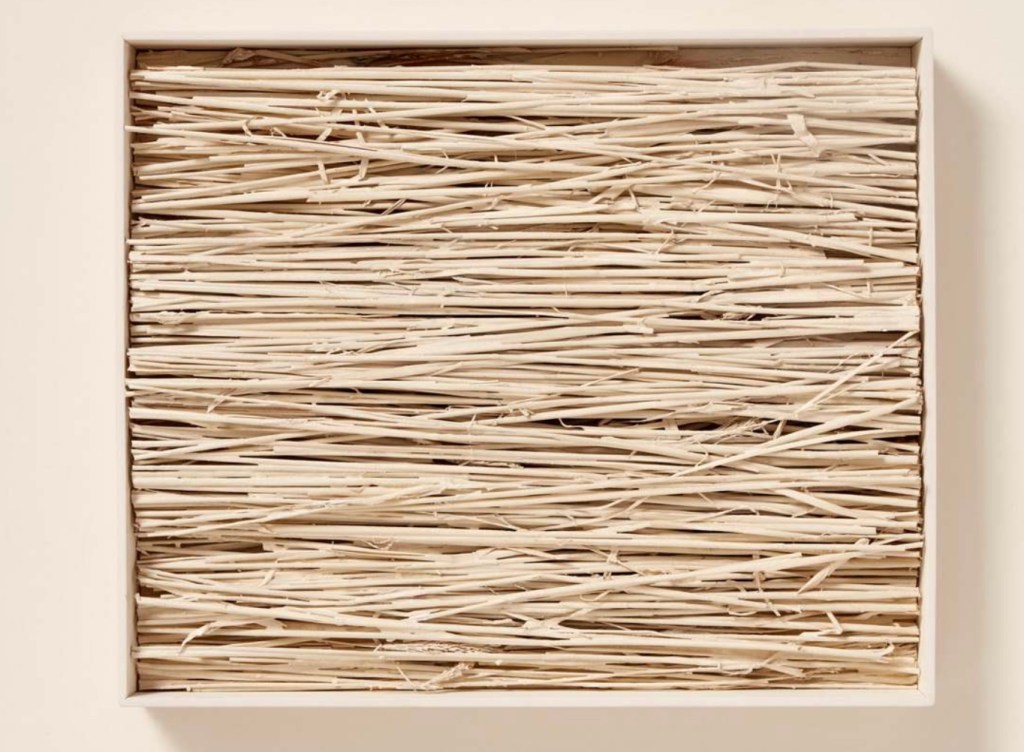
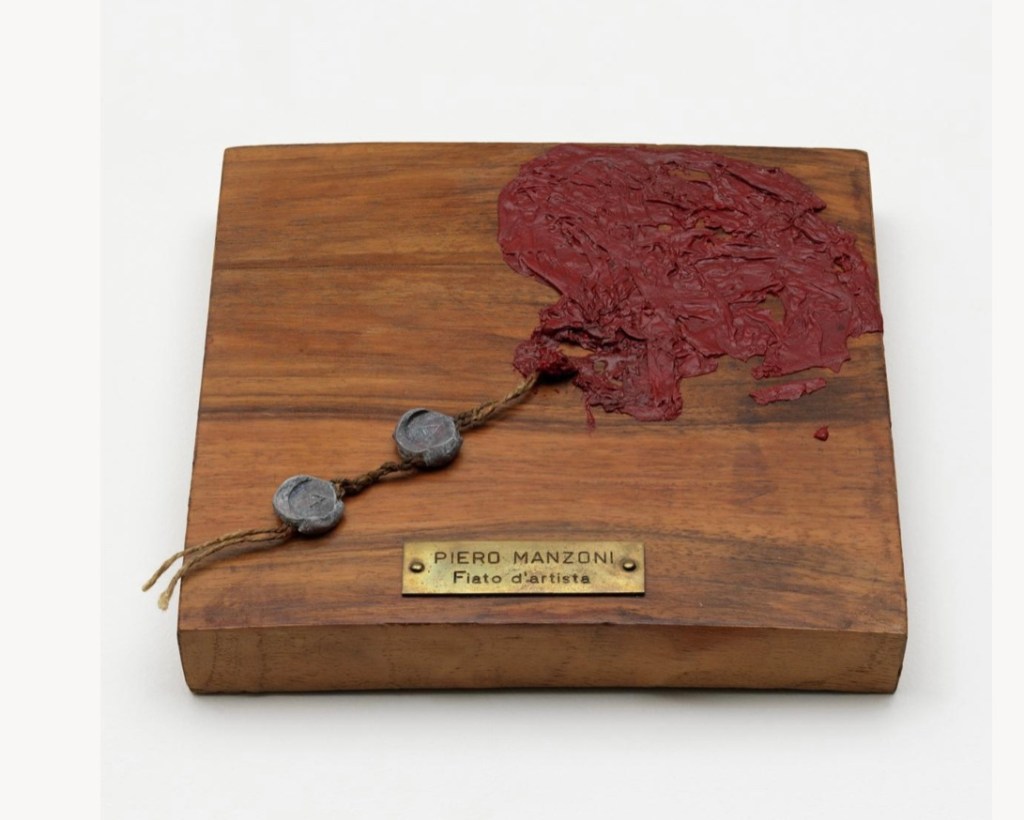
Piero Manzoni experimented with a variety of found objects and materials including his own faeces which he famously canned in a limited edition can labelled in German. He used a huge selection of media including stones, polystyrene, discarded packaging, cotton wool, straw, fur and more.
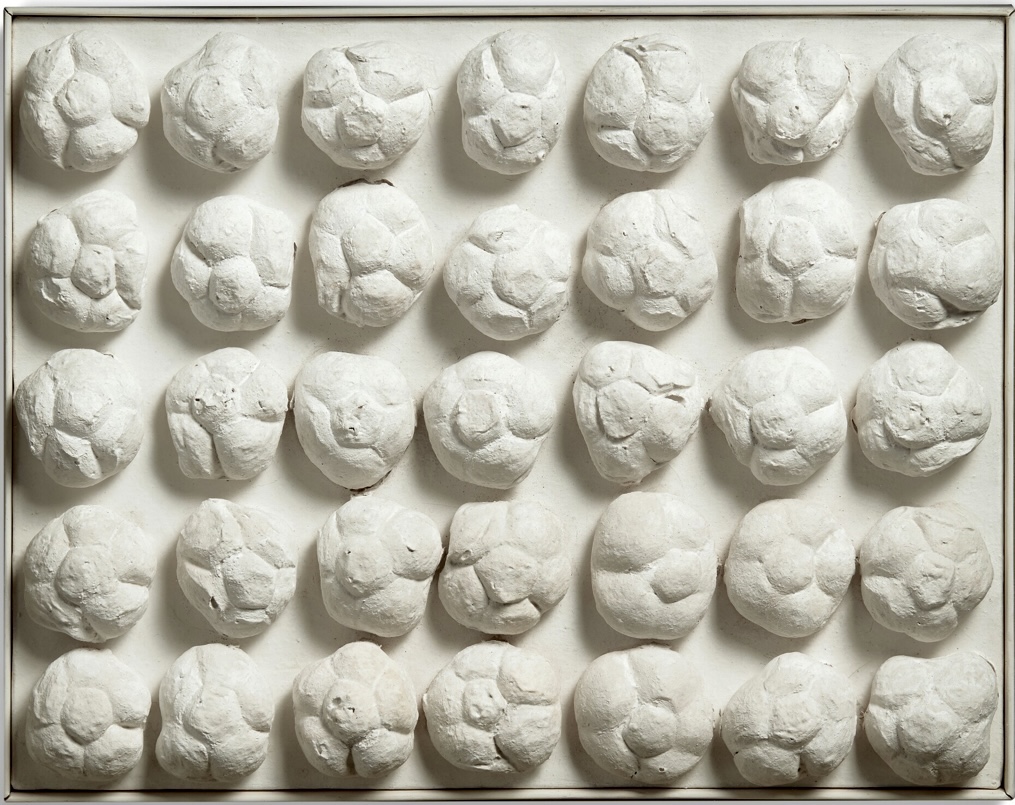
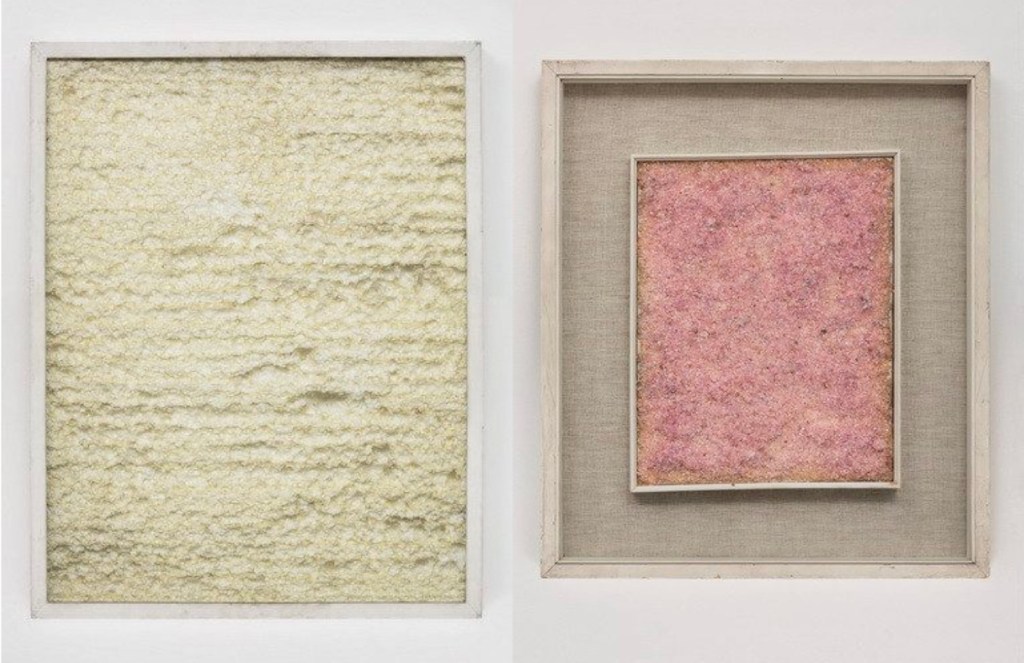
TRACEY EMIN
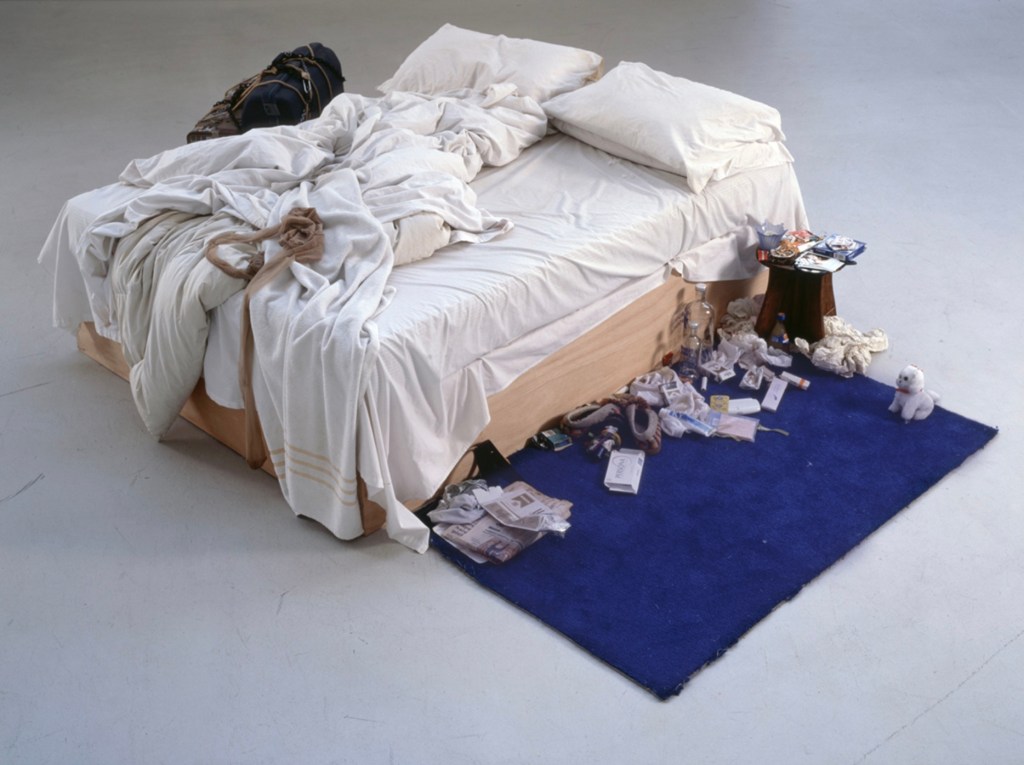
‘My Bed’ 1998
In this piece which launched her career, Emin used her actual bed and personal items that amassed in her room after she inhabited the bed for a few days after a relationship break-up and a subsequent depression and binge. When I look at this piece, I see vulnerability and the hopelessness one feels at the end of relationships. All these objects are random detritus that would ordinarily be thrown in the bin but they lay around the bed in a mess, reflecting the mess she felt inside.
By collecting these objects including the bed and even the carpet on which it all sat, Emin was able to assemble this scene in a gallery and what could have been destined for the trash and the washing machine takes on a different meaning and becomes a piece of art that allows the viewer to connect with the piece in their own personal way.
Harshly criticised when it was first shown, with many critics asking how this can be art?
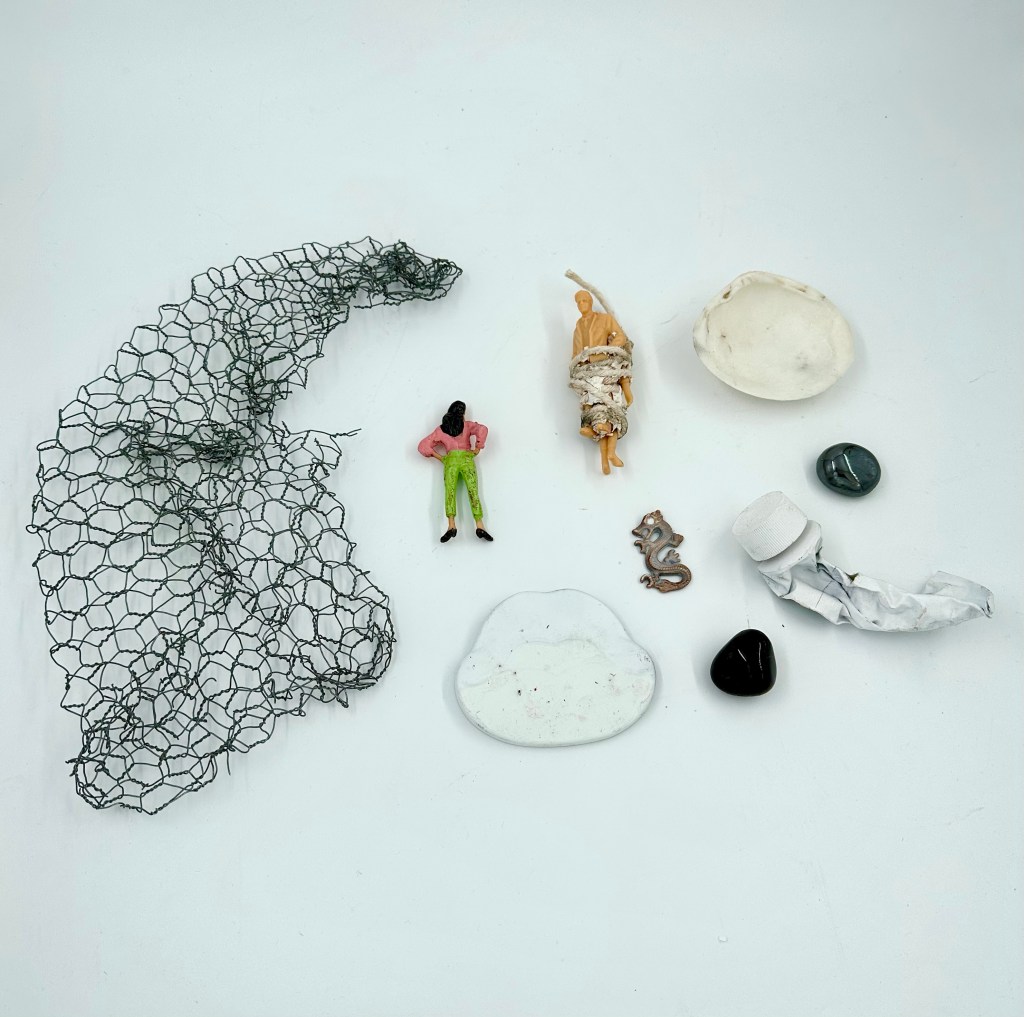
Collection of objects: Random and selected
 number5portfolio.com