Drawing Bones
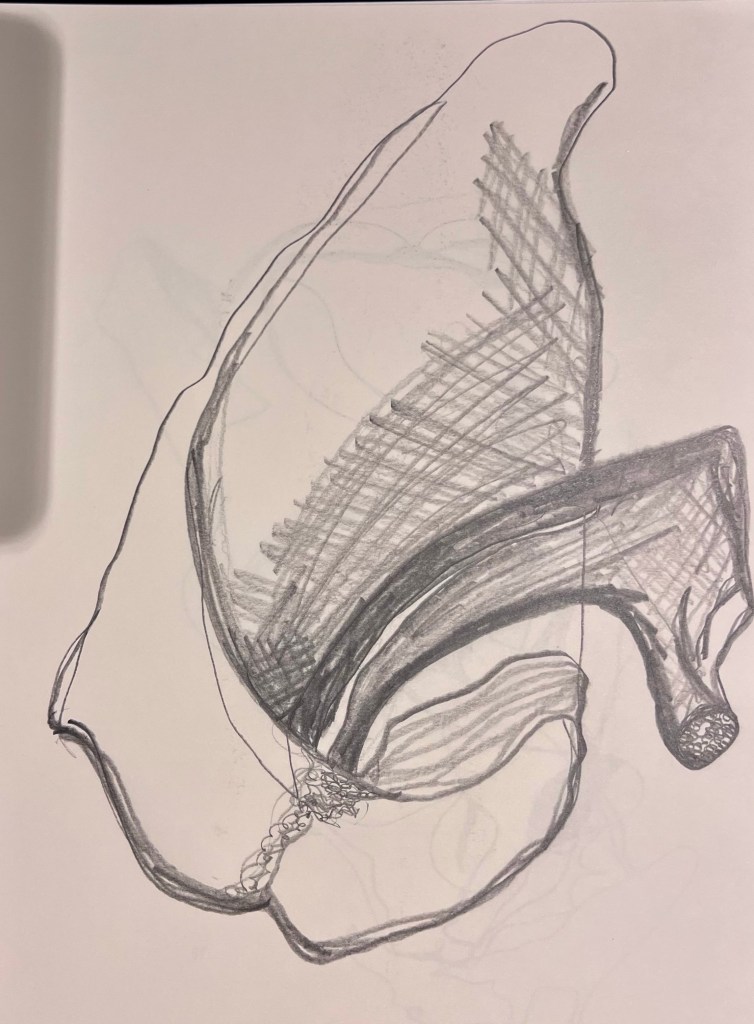
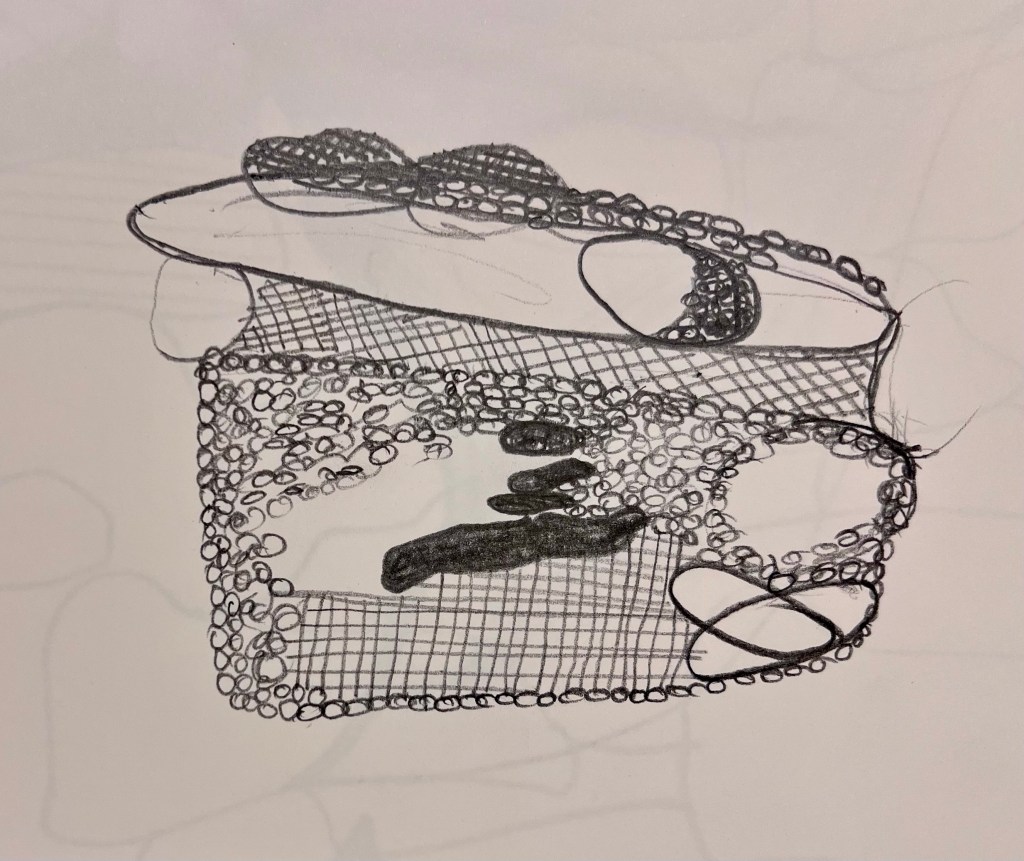
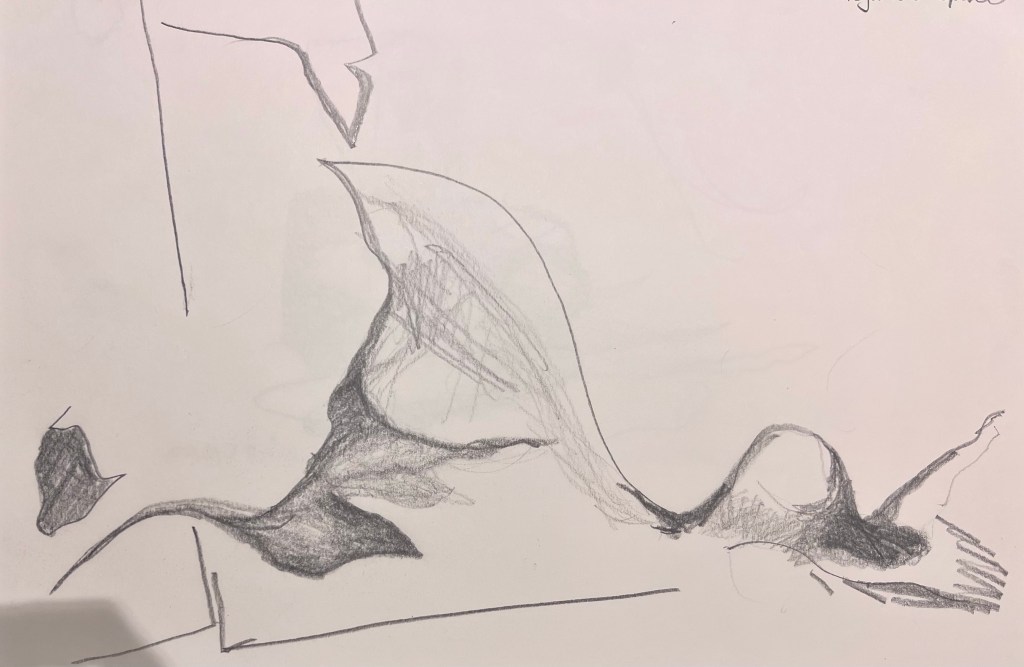
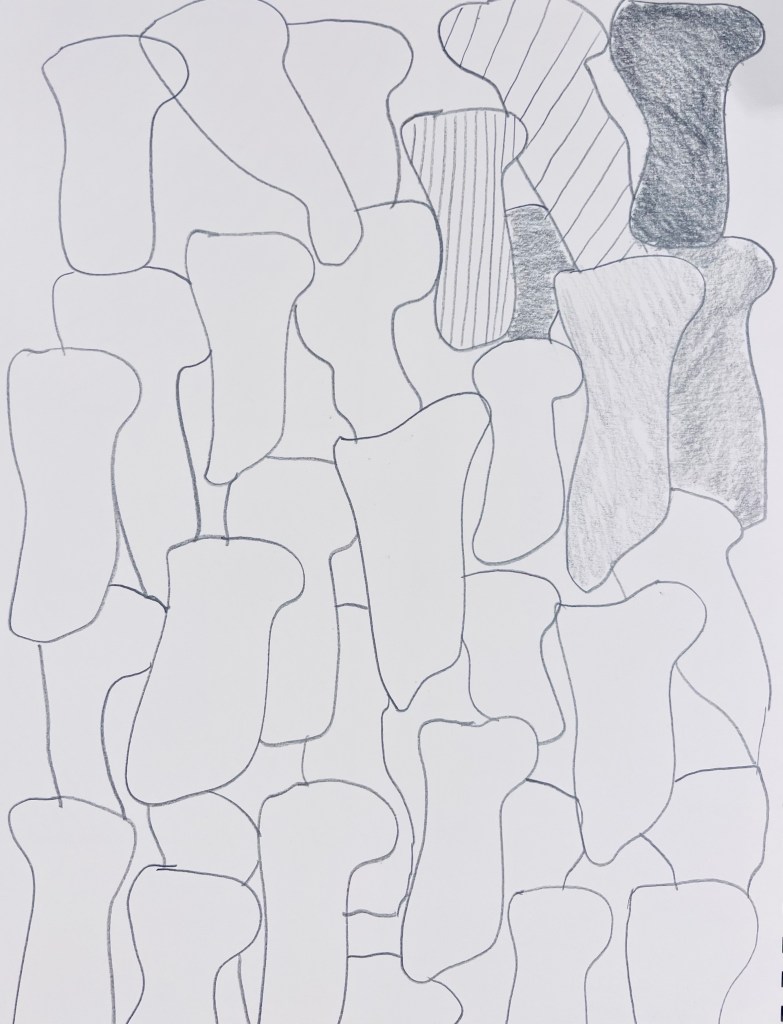
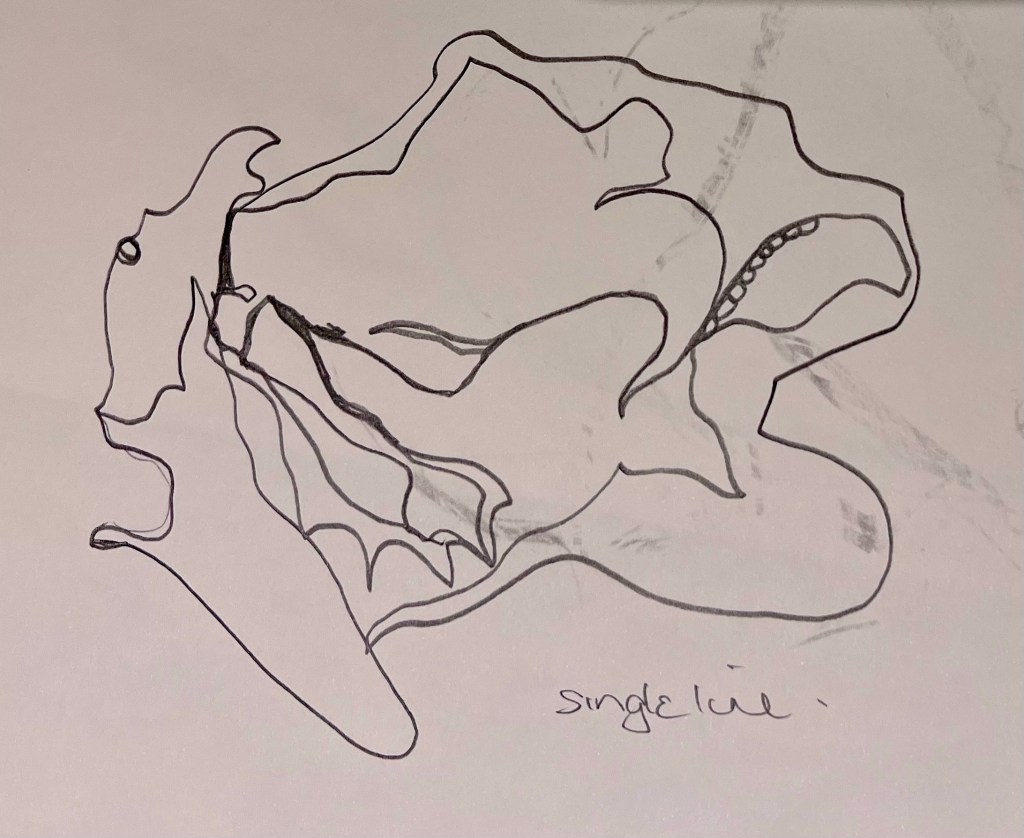

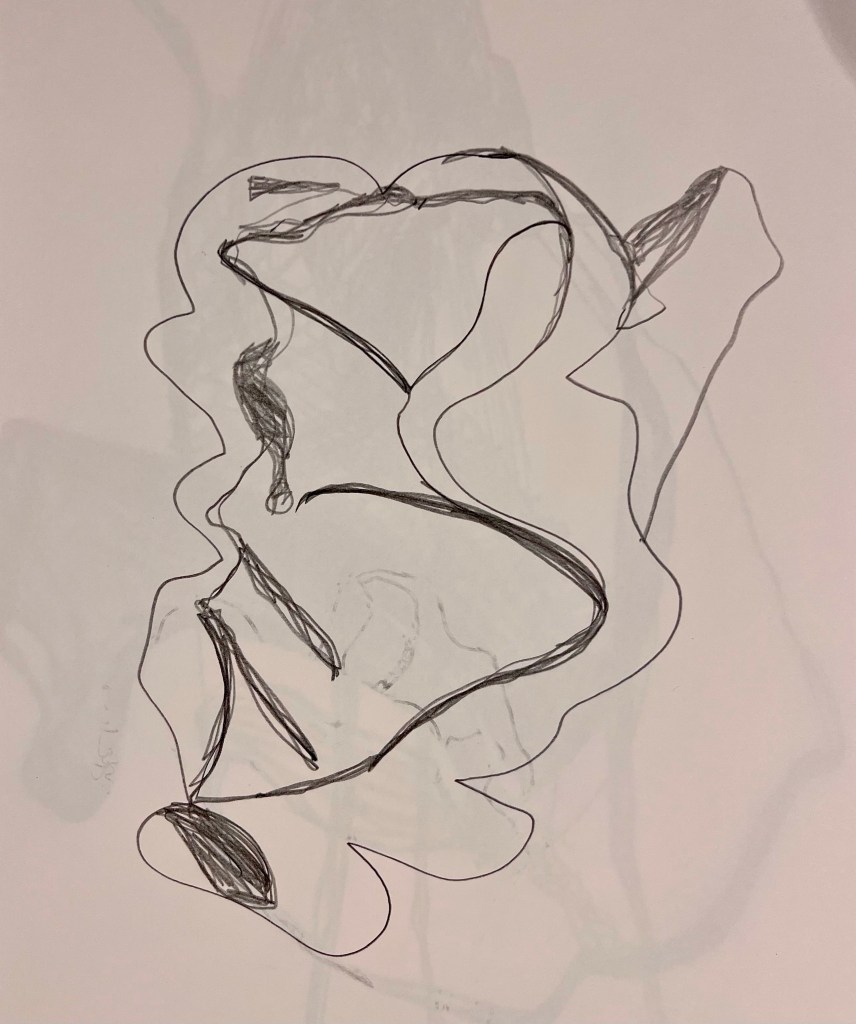
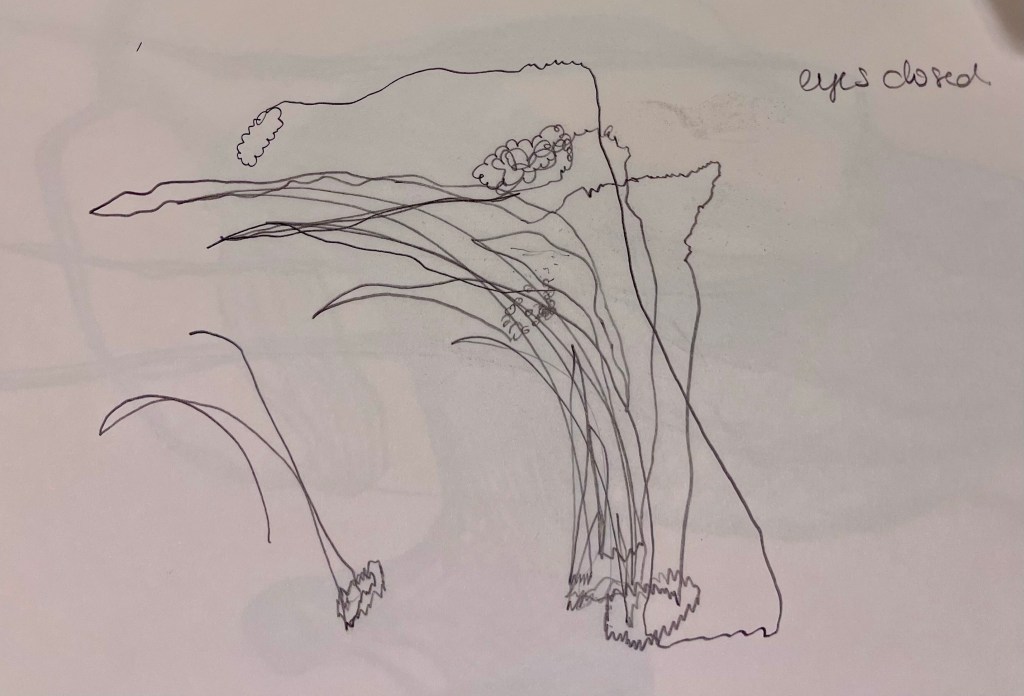
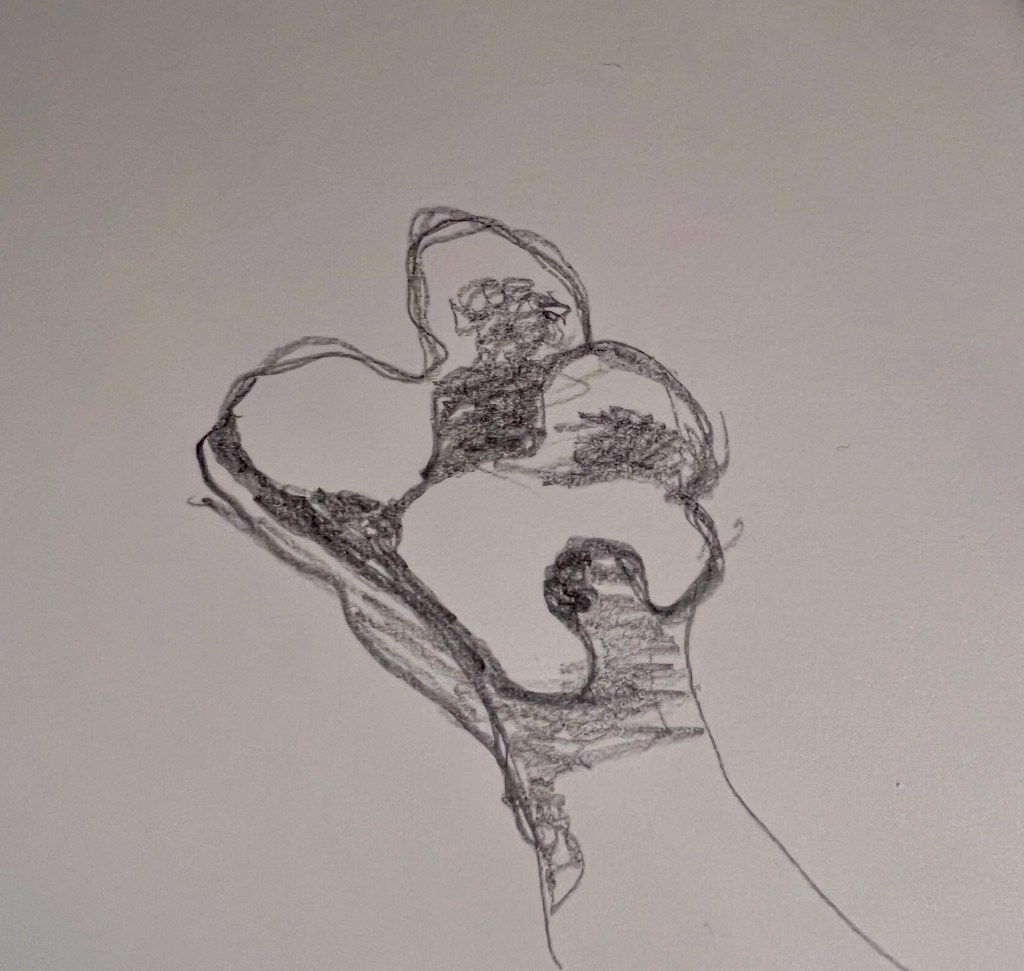
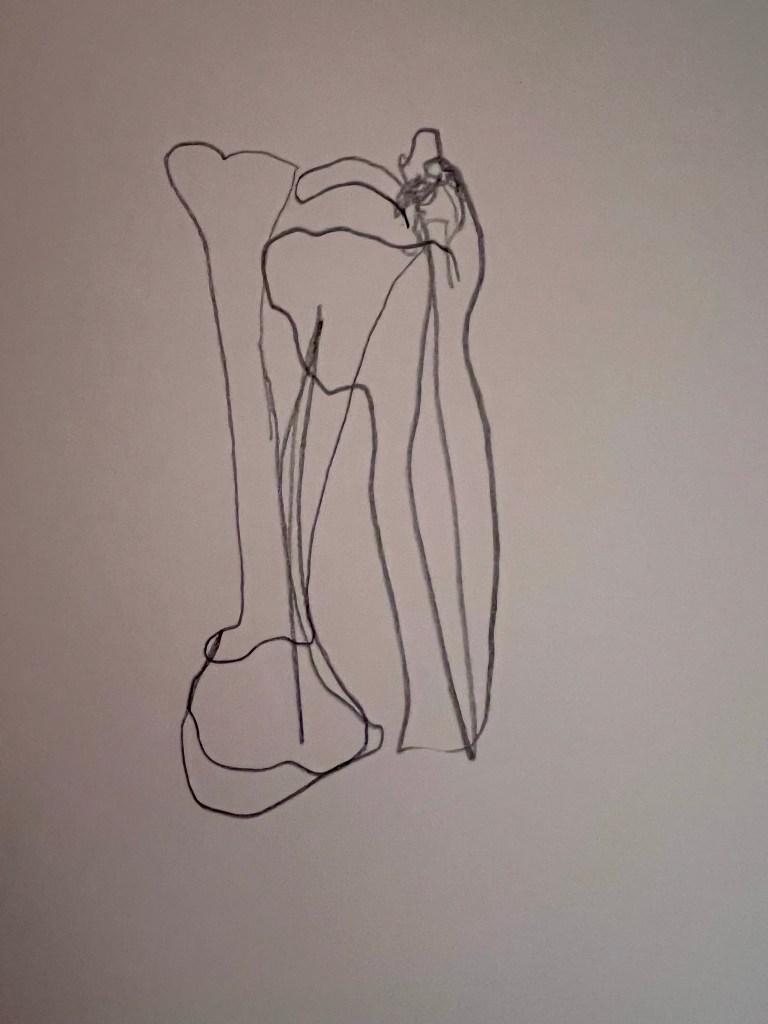

This was our very first task that we embarked on the afternoon of our first day. I was a bit shocked that we were starting drawing so quickly and felt initially awkward but once we started, I found myself absorbed in the process although I found the drawing under timed conditions hard and I was frustrated by my drawings as I wanted to make them better.
My favourite drawings I did were the ‘eyes closed’ and the negative space. I think because they were so abstract and in my mind didn’t ‘have to’ look like what was in front of me to draw.
I also liked the task of repeating the bone shape to form a pattern which turned out better than I imagined. I started to shade it in but I felt it looked better as a whole, as the just the outlines without any shading so I decided to leave the rest of the shapes blank.
I can see how I have got better with practise and more confident.
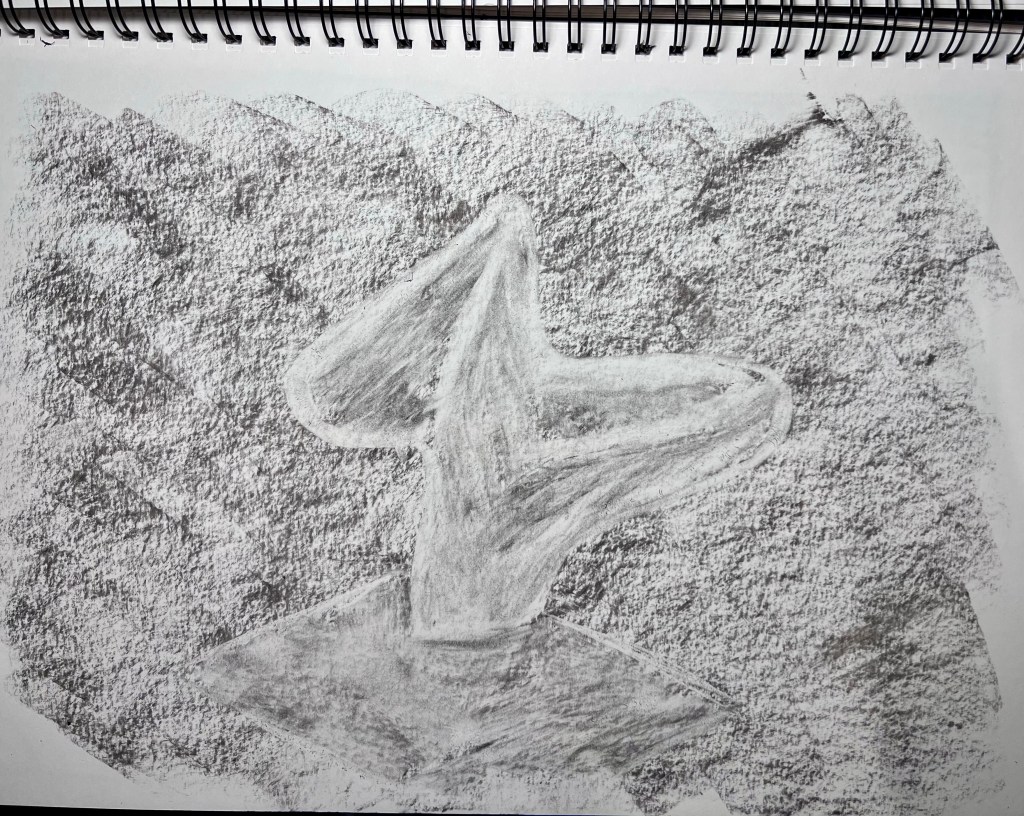
I went to see the Henry Moore sculptures at the Tate after trying to draw bones. I could really see how he used bones to create his forms. I tried to draw the Upright Form using charcoal and negative space. I liked creating an image using an eraser and I was surprised to find I could shade with it too.


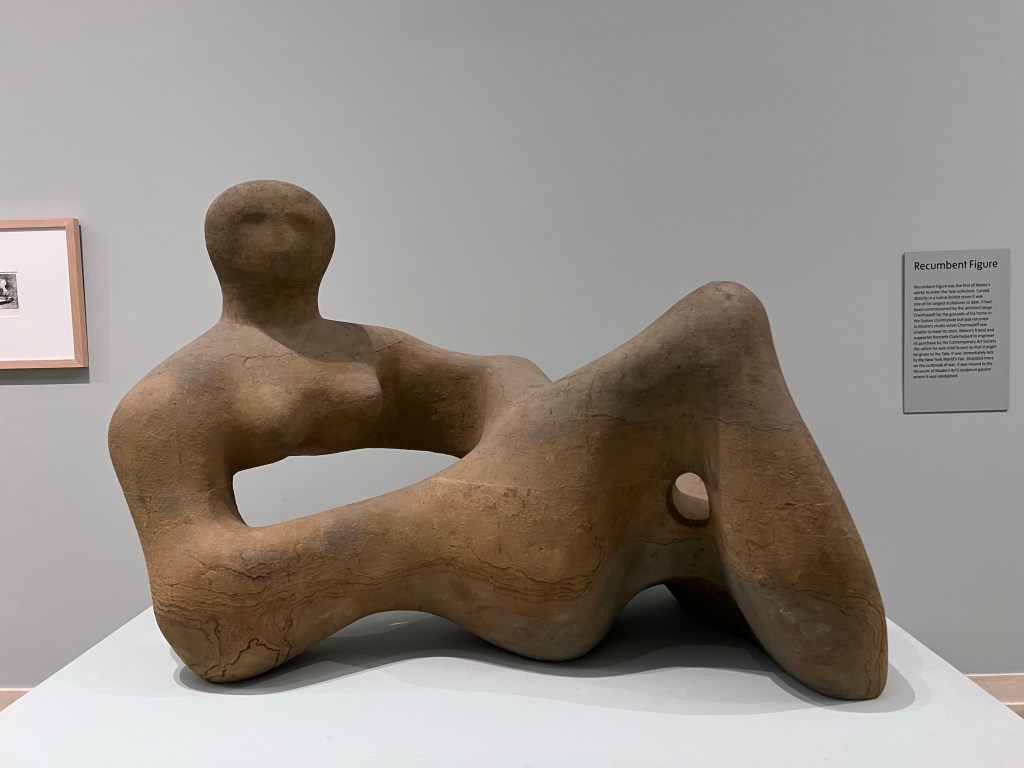
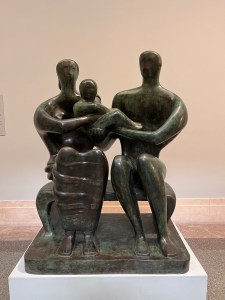

1966
Analysis of Cy Twombley
Researching different artists, I found myself drawn to Cy Twombly’s work. Although I was vaguely aware of it I hadn’t looked at his work or processes in any depth at all. I was interested reading that he experimented with the Surrealist technique of automatic drawing, developing a way of drawing in the dark which resulted in abstract curves and forms. The image below, ‘Untitled’ 1954 is an example of this.

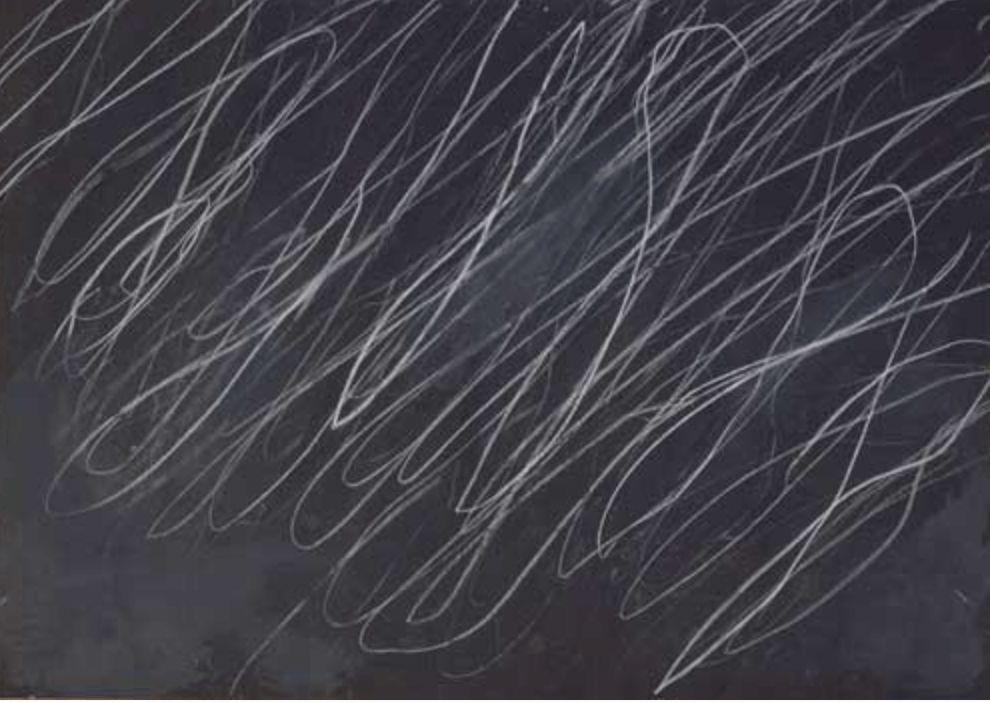
‘Untitled’ 1954
Twombly uses a wide variety of medium including but not limited to lead pencil, wax crayon, coloured pencils, ink, paint, charcoal. His mark making is done in many different ways from feverish scribbles, energetic brushstrokes, handprints, smearing paint, scratching the canvas, graffiti-like swirls.
In the image below, ‘Untitled 1968’ I like how he has used house paint to create the background and the swirling is done with wax crayon making to look like a blackboard and chalk.
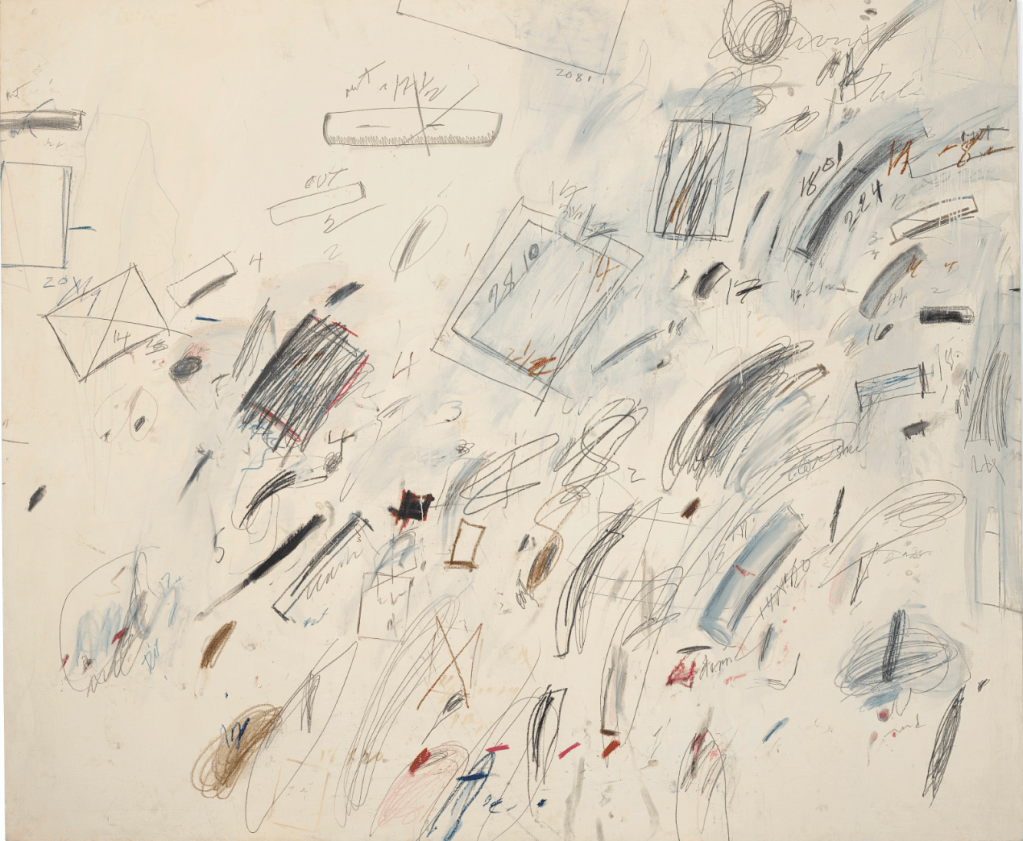
Twombly was very interested in tribal art and on a trip to Africa with his friend and contemporary Robert Rauschenburg, he made many sketches in his notebook using pencil. He was also influenced by myths and the architecture of Rome when he moved there in 1957.
It’s easy to see how this influenced his work as shown in the images below, the first one being his travel sketchbook from 1953 and the second painting Untitled (Bolsena) created in 1969 which sold at auction in 2020 for $38.7 million.

Drawing Movement
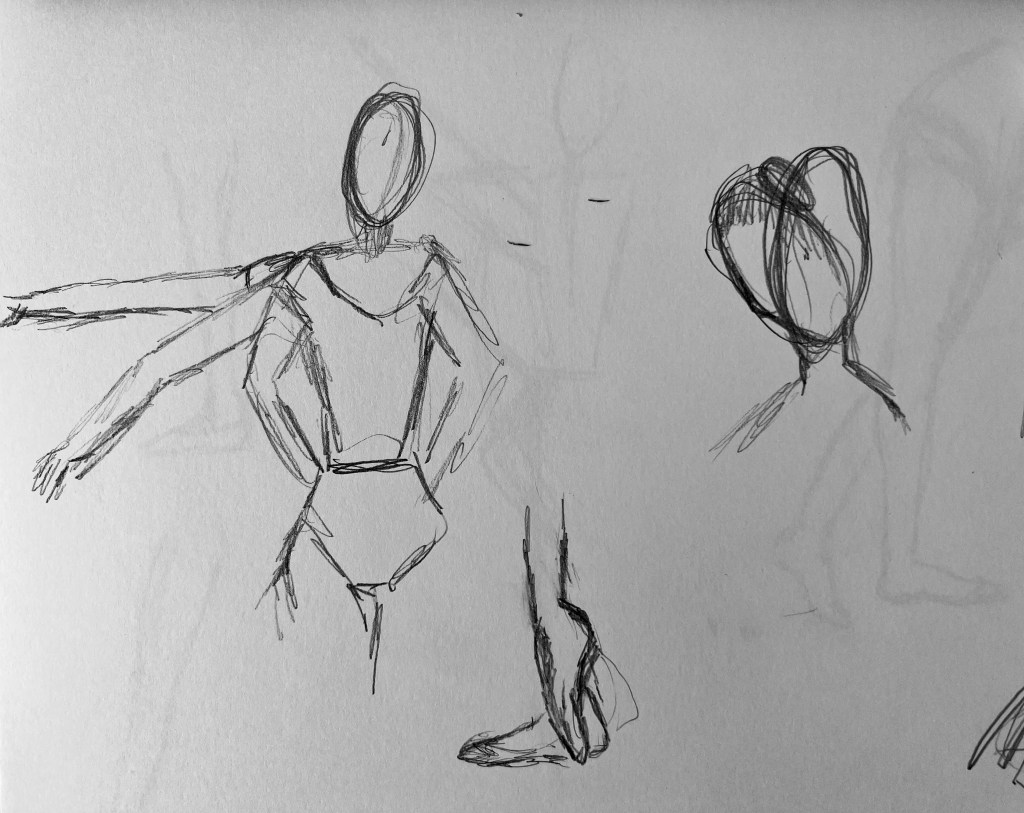
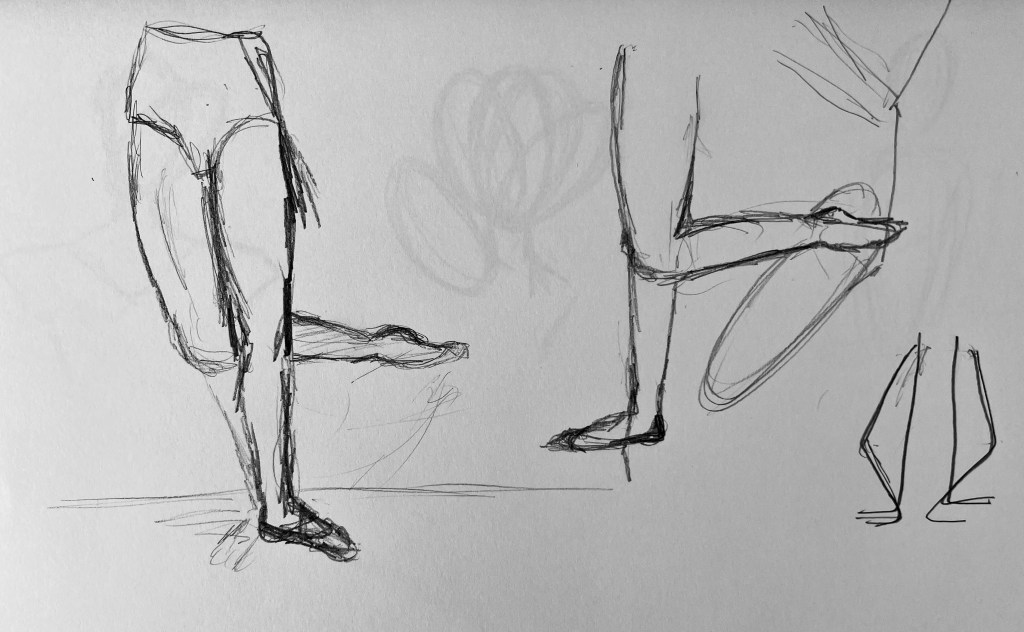
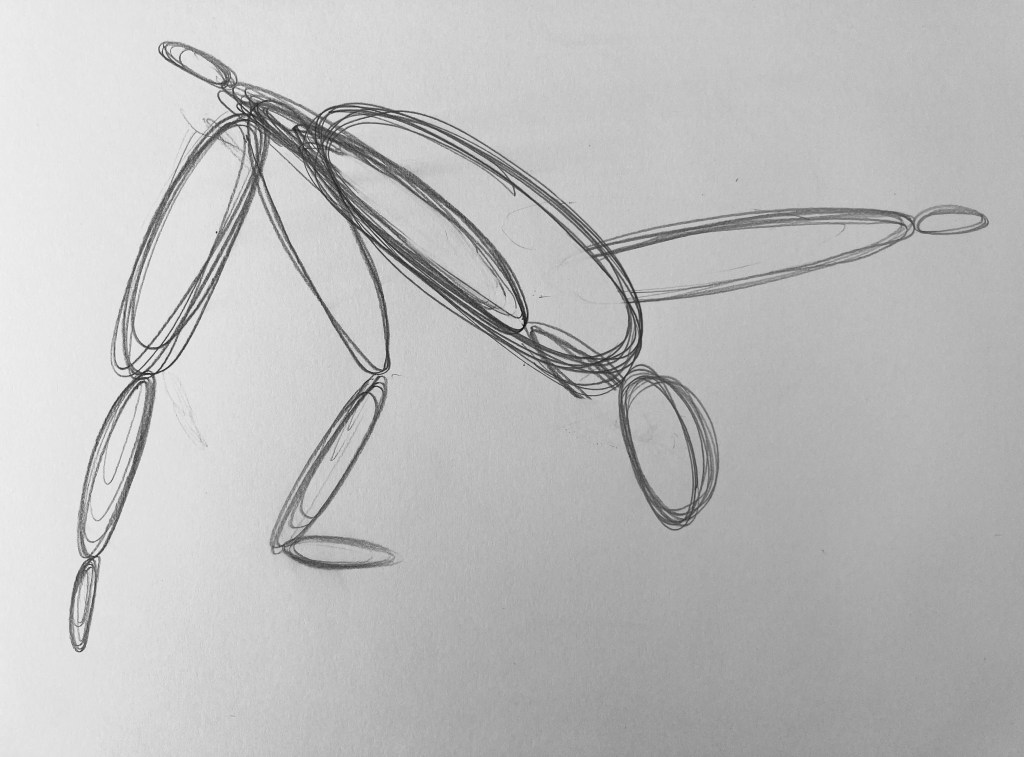
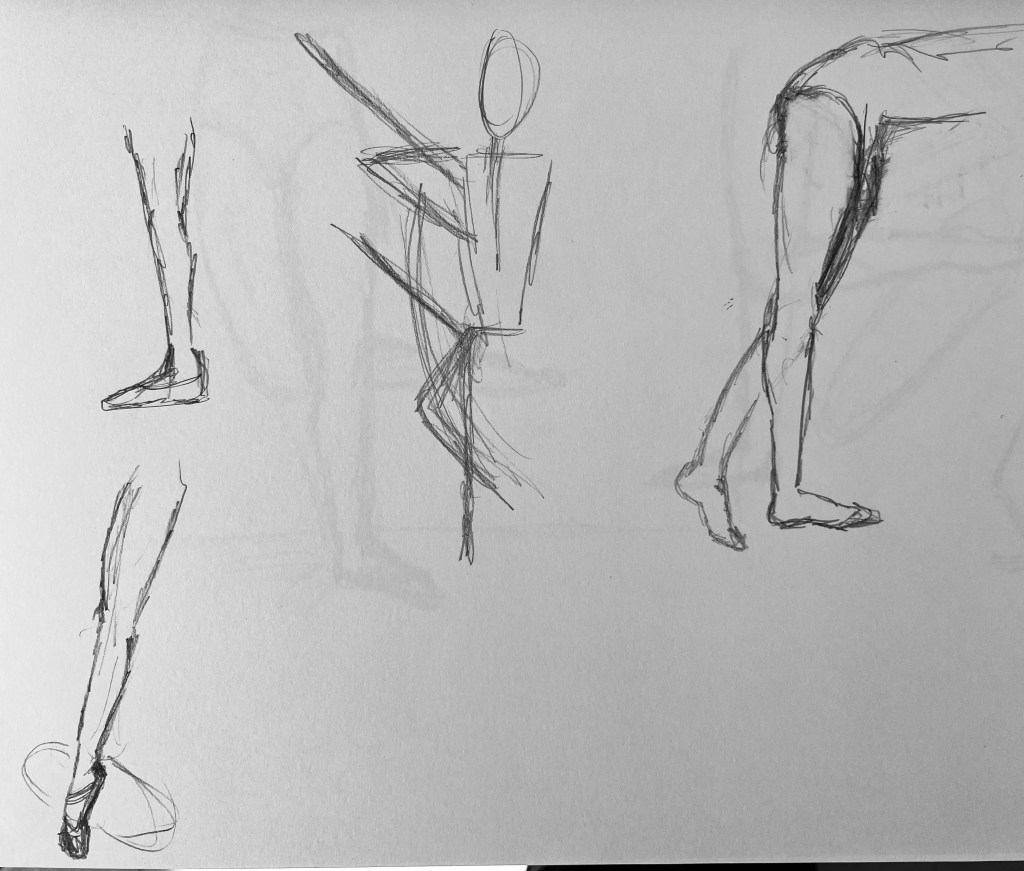
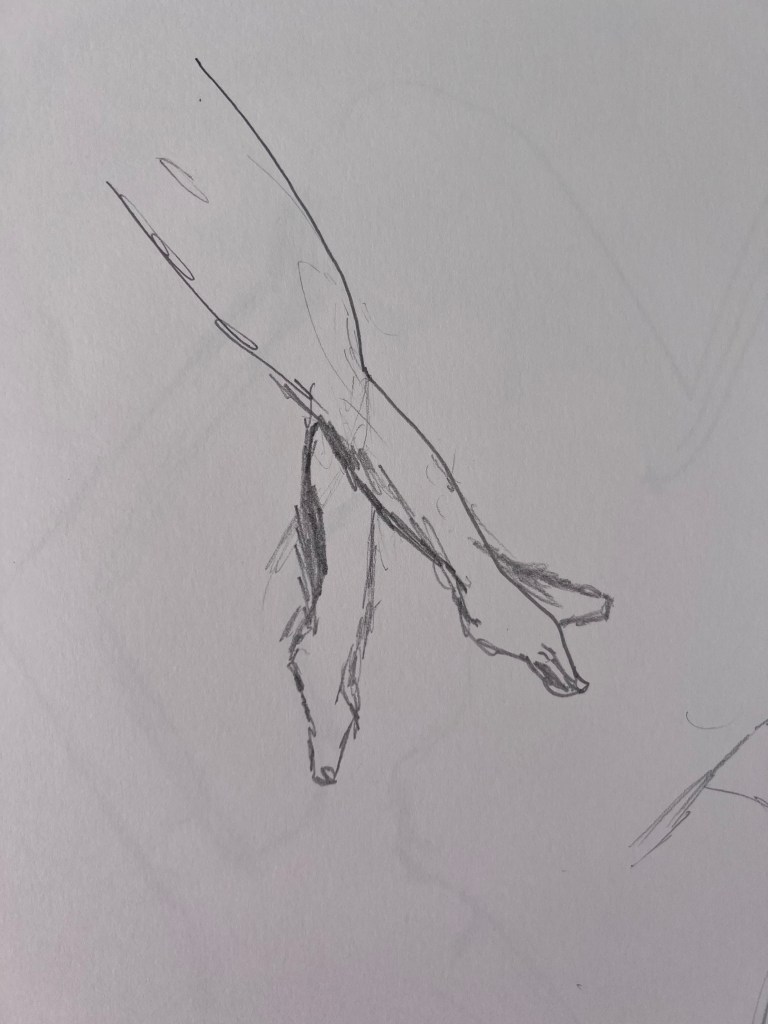
We spent a morning sketching and drawing the English National Ballet dancers in a lesson. It was a truly memorable day. I loved being in the studio watching these disciplined, strong, graceful women and listening to the pianist playing their repertoire over and over. It took my breath away.
I found the actual drawing really hard. I imagined my pencil would flow smoothly and purposefully over the page creating whirling, swirling images of dance as I watched this magical scene. Well….. that definitely didn’t happen! When I first started, I just couldn’t think how I could show movement in any way at all. I started by drawing a foot then a head and as the class progressed I felt more relaxed and confident so experimented a bit more and added to the static single limbs creating the beginnings of a sense of movement. Towards the end of the lesson I was really focused and enjoying trying different ideas. I started to get a real idea of drawing movement and I feel confident to keep experimenting. I was satisfied with the drawings I did because I could see my improvements as the lesson went on.





Collage on Movement
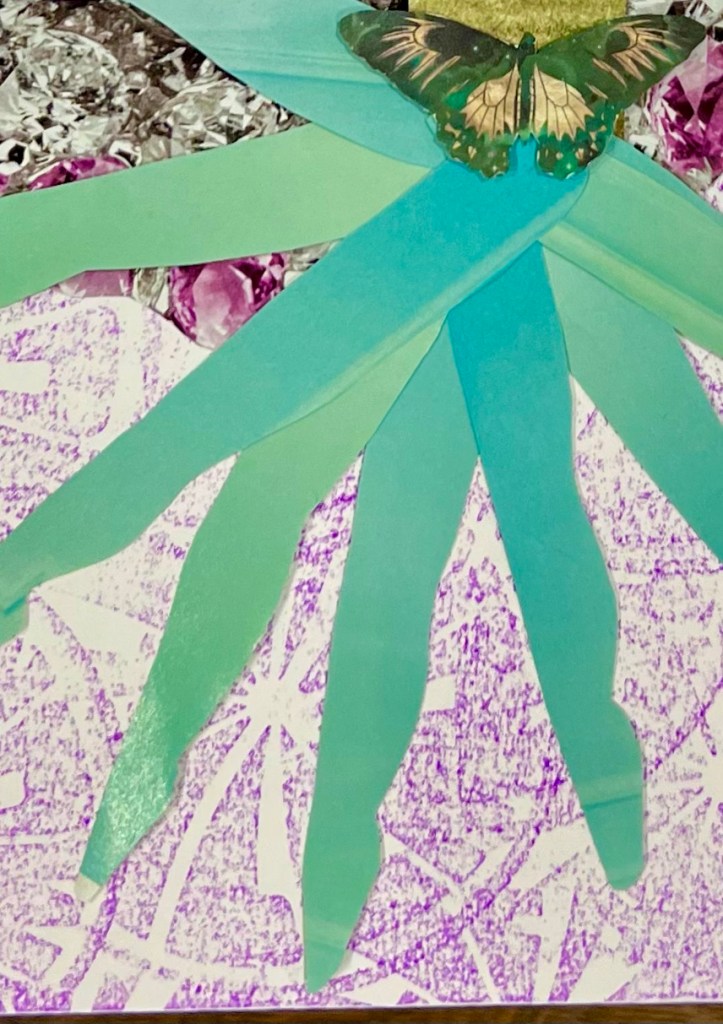
After sketching the ENB in a class, trying to capture movement with pencil and charcoal, we looked at capturing movement using collage. In this piece, I wanted to create a feeling of swirling around so I made a background of patterned circles using some rubber packaging material that had a round design embossed on it. I then made an ink pad by putting some purple ink on cotton wool and trying out different pressures of ‘stamping’ until I got this pattern. I cut out dancers legs from pages in magazines and fixed them in this shape, trying to portray the stages of a leg kicking upwards. I chose these particular pages to use because the colour reminded me of the Tiffany’s blue which made me think of Audrey Hepburn as Holly Golightly in the film Breakfast at Tiffany’s. The colour is iconic and it connected me to the film character who is a free spirit and the actress who was so elegant and graceful, like the dancers. The other cut out parts symbolise the movement of arms and hair and the swirling, sparkling diamonds add to the feeling of something that is not static. The butterfly is of course a symbol of transformation which is what I observed happening when the dancers moved from their initial still, statue-like pose, suddenly bursting into life with beautiful, strong and elegant movement.

 number5portfolio.com